
Why Time Feels Faster as We Get Older: The Psychology Explained
Have you ever noticed that summer vacations seemed to last forever during childhood, but now an entire year seems to pass in the blink of an eye? **Why time feels faster as we get older** is a fascinating question that many people experience as they move through life. As a child, waiting for your birthday felt like it took months. As an adult, it can feel as though your last birthday was just yesterday.
You are not alone in experiencing this. Many people feel that time passes more quickly as they grow older. But does time actually speed up, or does our brain begin to experience it differently?
According to psychology and neuroscience, our perception of time can be influenced by age, attention, memories, routines, and emotional experiences. Let’s explore why time may seem to move faster as we get older.
1. Childhood Is Filled With New Experiences

During childhood, we are constantly learning and experiencing new things. Going to school for the first time, making a new friend, learning to ride a bicycle, or visiting a new place can all feel special.
When we experience something new, our attention is often more engaged. We notice small details around us, and the experience may become more memorable.
Example:
A child visiting a fair for the first time may remember the rides, lights, toys, sounds, and food stalls. An adult who has visited many fairs may not notice as many new things.
When life is filled with new experiences, time can feel more extended and memorable.
2. Repetitive Routines Can Make Time Feel Shorter

As we grow older, our daily routines often become more predictable. Going to work, returning home, eating dinner, checking our phones, and going to sleep can make many days feel similar. This is one reason why time feels faster as we get older, as repetitive routines may create fewer distinct memories, making weeks and months seem to pass quickly when we look back.
When days contain few new experiences, the brain may have fewer distinct memories to separate one day from another. Looking back, several days can seem to blend together.
Example:
Imagine spending an entire week doing almost the same tasks every day. On Sunday, you may find it difficult to remember what made Monday, Tuesday, or Wednesday different. The whole week may feel as though it passed quickly.
By contrast, a week filled with travel or new activities may feel longer when you look back because it contains more distinct memories. This helps explain why time feels faster as we get older, especially when our daily routines become repetitive.
3. One Year Becomes a Smaller Part of Your Life
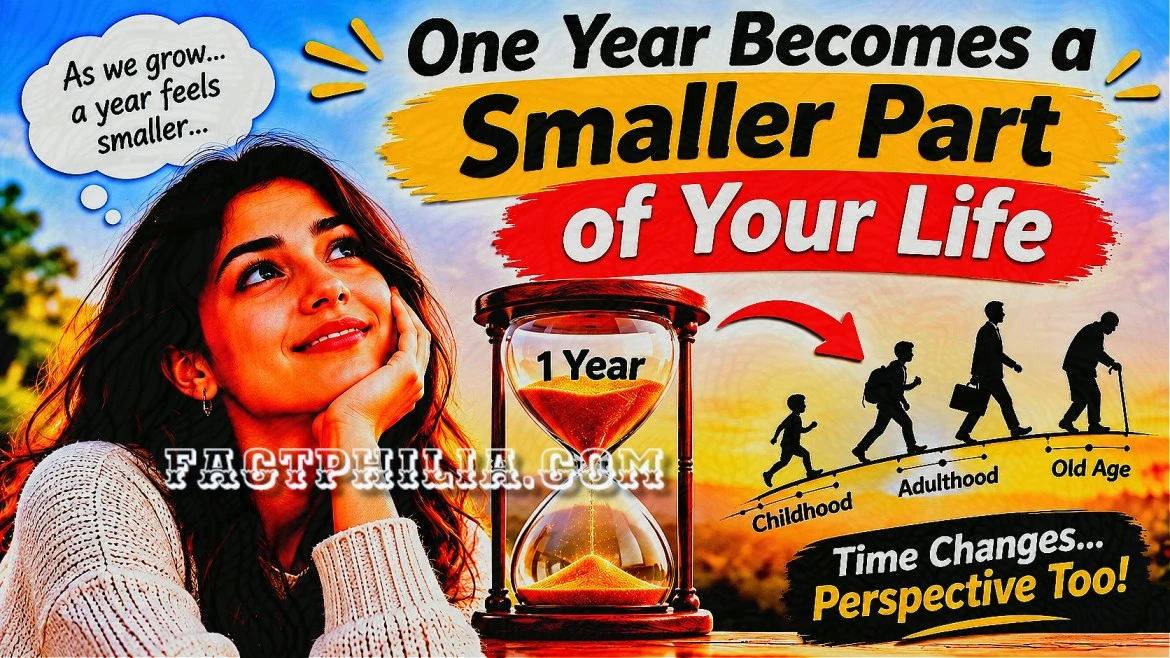
One One possible way to understand our perception of time is to compare a period with the length of our entire life. This perspective helps explain why time feels faster as we get older, because each passing year represents a smaller proportion of our total life experience.
When you are five years old, one year represents about one-fifth of your life. At 50, one year represents a much smaller portion of your total life experience.
Example:
For a five-year-old, waiting one year can feel like a very long time because it represents a large part of their life so far. For a 40-year-old, one year may feel relatively short.
This ratio-based idea is a simplified explanation, not a complete scientific account of time perception. However, it can help explain why a year may feel shorter as we age and why time feels faster as we get older, especially when we compare each year with the many experiences of our earlier lives.
4. Being Busy Can Make Time Seem to Fly

When we are deeply involved in an activity, our attention shifts away from time and toward the task. As a result, hours may seem to pass quickly.
Example:
If you are reading an interesting book or talking with friends, you may feel that only a few minutes have passed, even though an hour has gone by.
On the other hand, when you are waiting for something and repeatedly checking the clock, time may seem to move slowly.
This shows that our perception of time is not determined by age alone. Where our attention is focused also matters.
5. The Number and Clarity of Memories Matter

When we look back on a period of time, our impression may be influenced by how many distinct events occurred and how clearly we remember them. This helps explain why time feels faster as we get older, as routine days may leave fewer distinct memories, while meaningful experiences can make our past feel richer and more memorable.
New places, special occasions, achievements, and meaningful conversations can make a period feel rich in memories.
Example:
A month in which you visited a new place, learned a skill, and spent special time with family may feel long and memorable when you look back.
In contrast, a month in which every day felt similar may seem shorter in retrospect.
Keep in mind that time perception varies from person to person. Having more memories does not always mean that a period will feel longer.
6. Stress and Responsibilities Can Change Our Experience of Time
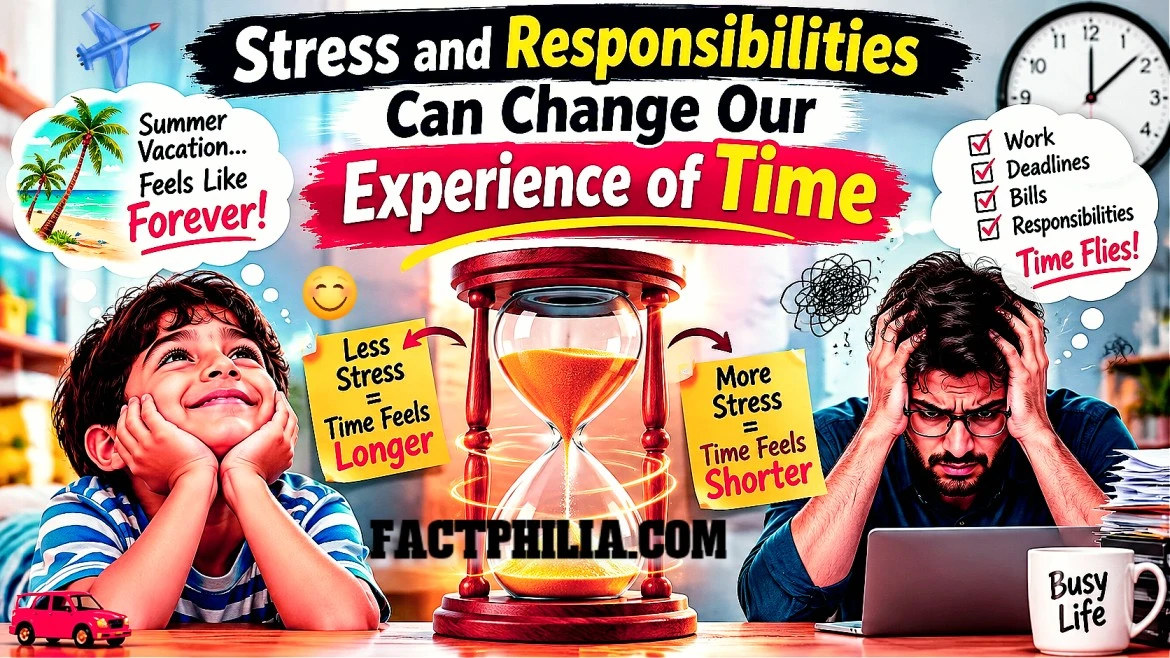
Adult life often brings more responsibilities, including work, family, finances, and future planning. When our minds are occupied with many things, we may pay less attention to the present moment.
Example:
Someone who spends the day managing work, household tasks, and other responsibilities may reach the evening feeling as though the day passed without being noticed.
However, stress can sometimes make time feel slower during a difficult situation. Its effect is not always the same; it depends on the circumstances and the individual.
7. Learning New Things Can Make Time More Memorable

New activities engage our attention and provide experiences that differ from our usual routines. This adds variety to life and can create more distinct memories, helping explain **why time feels faster as we get older** when our days become repetitive. By exploring new places, learning unfamiliar skills, or trying different activities, we give our minds fresh experiences to notice and remember. These meaningful moments can make life feel richer and help us look back on our time with a stronger sense of variety and depth.
Example:
If you do something new each week—such as reading a new book, taking a different route, learning to cook, or visiting a new place—you create a wider range of experiences.
This does not mean that new activities change the speed of the clock. They can make your experiences and memories richer, which may influence how time feels when you look back.
8. There Are Two Different Ways We Experience Time
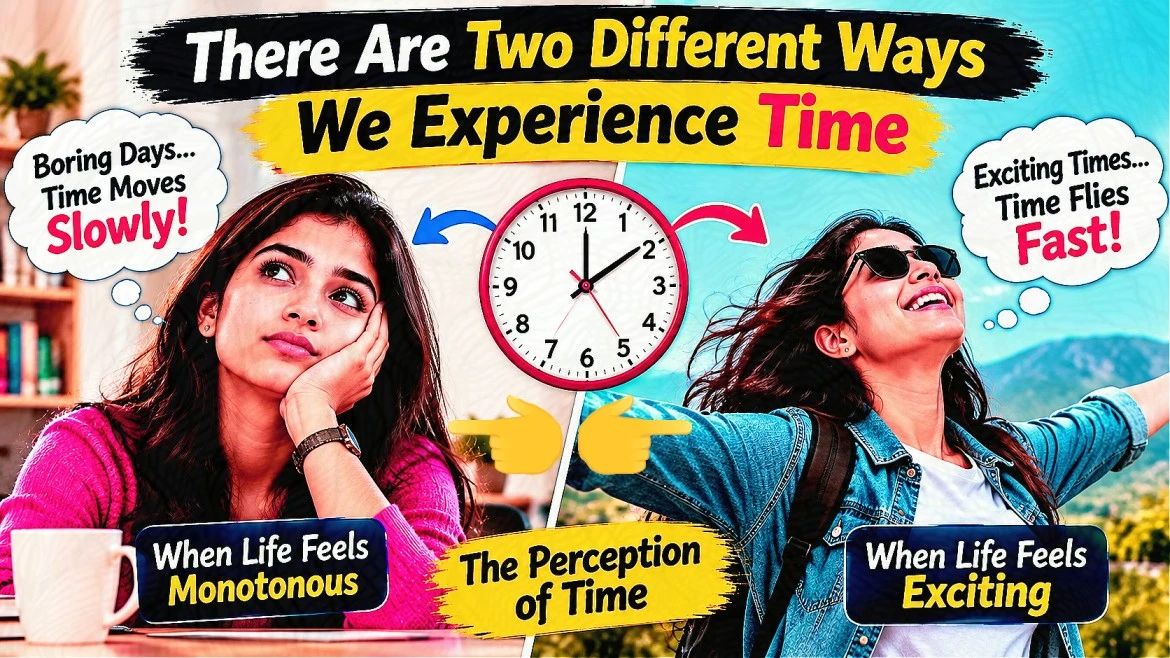
It is useful to distinguish between two aspects of time perception to better understand **why time feels faster as we get older**. One is how quickly time seems to pass while we are experiencing an event, such as a busy afternoon or an enjoyable vacation. The other is how long that period feels when we look back on it through our memories. These two experiences do not always match: a day may feel long while we are living through it, yet seem short in retrospect if it contains few memorable moments. Understanding this difference helps explain why our perception of time can change with age, routines, attention, and the experiences we remember:
Experiencing Time in the Present
When you pay attention to time while doing something, minutes may feel fast or slow. For example, waiting for someone can make five minutes feel unusually long.
Remembering Time After It Has Passed
When you look back on a week, month, or year, your impression may depend on how many distinct events occurred and how clearly you remember them.
That is why a busy day may pass quickly in the moment but seem short in memory. A memorable trip, on the other hand, may feel as though it lasted a long time when you look back, even if it passed quickly while you were experiencing it.
9. Does Time Actually Speed Up as We Get Older?

No. According to the clock, the length of a minute, an hour, or a day does not change. What changes is our perception of time.
The feeling that time is moving faster as we grow older may be influenced by several interconnected factors, including repetitive routines, fewer new experiences, divided attention, the way memories are formed, and how we compare each passing period with the years we have already lived. These factors help explain **why time feels faster as we get older**. When our days follow familiar patterns, fewer moments may stand out as unique or memorable, making weeks and months seem to blend together. Meanwhile, when our attention is constantly occupied by responsibilities, work, or everyday distractions, we may notice less of the time passing around us. Our memories also shape this experience: periods filled with meaningful events and new discoveries often feel richer when we look back, while routine periods may seem surprisingly short. As we age, we may also compare each new year with a growing collection of past experiences, which can influence how quickly a year appears to pass. Together, these factors show that our sense of time is shaped not only by the clock, but also by how we live, pay attention, and remember our experiences.
It is also important to remember that not everyone experiences time in the same way. People may perceive time differently as they age, and their life circumstances can influence that experience.
10. What Can We Do to Make Time Feel More Meaningful?

We cannot stop time, but we can make our experiences more meaningful, memorable, and fulfilling. Understanding **why time feels faster as we get older** reminds us of the importance of living with intention rather than allowing our days to pass unnoticed. By embracing new experiences, spending quality time with loved ones, learning new skills, pursuing meaningful goals, and appreciating the small moments of everyday life, we can create memories that make our lives feel richer. Instead of simply counting the days and years, we can focus on making each moment matter. Although time will continue to move forward, the experiences we create and the memories we cherish can give our lives a deeper sense of purpose and meaning.
- Learn something new: Try learning a skill, language, sport, or creative activity.
- Change your routine: Take a different route or visit a new place occasionally.
- Pay attention to meaningful moments: Put your phone aside during meals, conversations, or family time.
- Record your memories: Keep a journal or take photos of memorable events each month.
- Set small goals: Plan one activity each week that you can look forward to.
- Make time to relax: Instead of staying busy all the time, spend some moments without rushing.
The goal of these habits is not to slow down time, but to experience life more attentively.
Conclusion
The feeling that time passes faster as we grow older is a common human experience. **Why time feels faster as we get older** may be connected not only to age but also to our routines, attention, memories, responsibilities, and new experiences. These factors can influence how we experience and remember the passage of time.
During childhood, the world is full of new discoveries, so even small events can feel significant and memorable. In adult life, when days become more similar, time may seem shorter when we look back.
Adding new experiences, paying attention to the present, and creating meaningful memories can help us make our time feel richer.
We may not control the speed of time, but we can influence how meaningfully we experience it.
Remember: Time may not actually be moving faster. Our routines and memories may simply be making it feel that way.
Frequently Asked Questions (FAQs)
1. Why does time seem to pass faster as we get older?
Possible reasons include repetitive routines, fewer new experiences, divided attention, and comparing a period of time with our entire life.
2. Does time actually speed up as we age?
No. The clock continues to measure time at the same rate. What changes is the way we experience and remember it.
3. Why did school vacations feel longer during childhood?
Many childhood experiences are new, and children may pay close attention to their surroundings. This can make vacations feel more extended and memorable.
4. Can trying new things make time feel slower?
New activities can create more varied experiences and memories. As a result, the time may feel longer or more memorable in retrospect, although this varies from person to person.
5. Does stress make time pass faster?
Stress and busyness may sometimes make a day feel as though it passed quickly. In other difficult situations, time may feel slower. The effect depends on the circumstances.
Discover More Interesting Facts
Curious to learn more? Explore our blog for fascinating facts, psychology insights, knowledge, and stories that make you think.
Explore Our Blog →Related Post
Why Do We Put Off Important Tasks? 10 Psychological Reasons
Why Do We Put Off Important Tasks? 10 Psychological Reasons and Ways to Overcome ThemHave you ever delayed an important…

Why Time Feels Faster as We Get Older: 7 Powerful
Why Time Feels Faster as We Get Older: The Psychology ExplainedHave you ever noticed that summer vacations seemed…

Decision Making Psychology: 10 Amazing Facts That Reveal Your Brain’s
Decision Making Psychology: 10 Amazing Facts That Reveal Your Brain’s Hidden SecretsHave you ever wondered why you choose…

Greater Noida Facts: 10 Amazing Facts That Will Surprise You!
India Facts • Uttar Pradesh Greater Noida facts reveal why this planned city in Uttar…

7 Dark Psychological Tricks Your Brain Uses Without You Even
7 Psychological tricks your brain uses without you even realizingHave you ever wondered how often your brain influences your decisions…

7 Dark Psychology Facts About Yourself That You’re Ignoring Right
7 Dark Psychology Facts About Yourself That You’re Ignoring Right NowHave you over wondered how your brain influences the way…


Leave a Reply