
Decision Making Psychology: 10 Amazing Facts That Reveal Your Brain’s Hidden Secrets

Have you ever wondered why you choose one product over another, change your mind at the last moment, or make a decision that you later regret? Every day, we make hundreds of choices, from deciding what to eat to making important career and financial decisions. But have you ever stopped to think about what actually happens inside your brain when you make a choice?
Decision making psychology helps explain how our thoughts, emotions, experiences, habits, and surroundings influence the choices we make. Sometimes we carefully compare our options, while at other times we decide almost automatically without realizing what influenced us.
Understanding these psychological processes can help us recognize common thinking patterns, avoid certain mistakes, and make more informed decisions. Here are 10 fascinating facts about the psychology of decision-making that explain how your brain makes choices.
What Is Decision Making Psychology?
Decision making psychology is the study of how people evaluate options, process information, consider possible outcomes, and choose between different alternatives.
Our decisions are not always based on logic alone. Emotions, memories, personal beliefs, social pressure, and mental shortcuts can also influence the final outcome.
For example, decision making psychology explains why you might buy an expensive product because it looks attractive, choose a familiar brand because you trust it, or avoid an opportunity because you are afraid of failure. These choices demonstrate how several psychological factors can work together to influence our everyday decisions.
10 Facts About Decision Making Psychology
1. Our Brain Does Not Analyze Every Decision in Detail
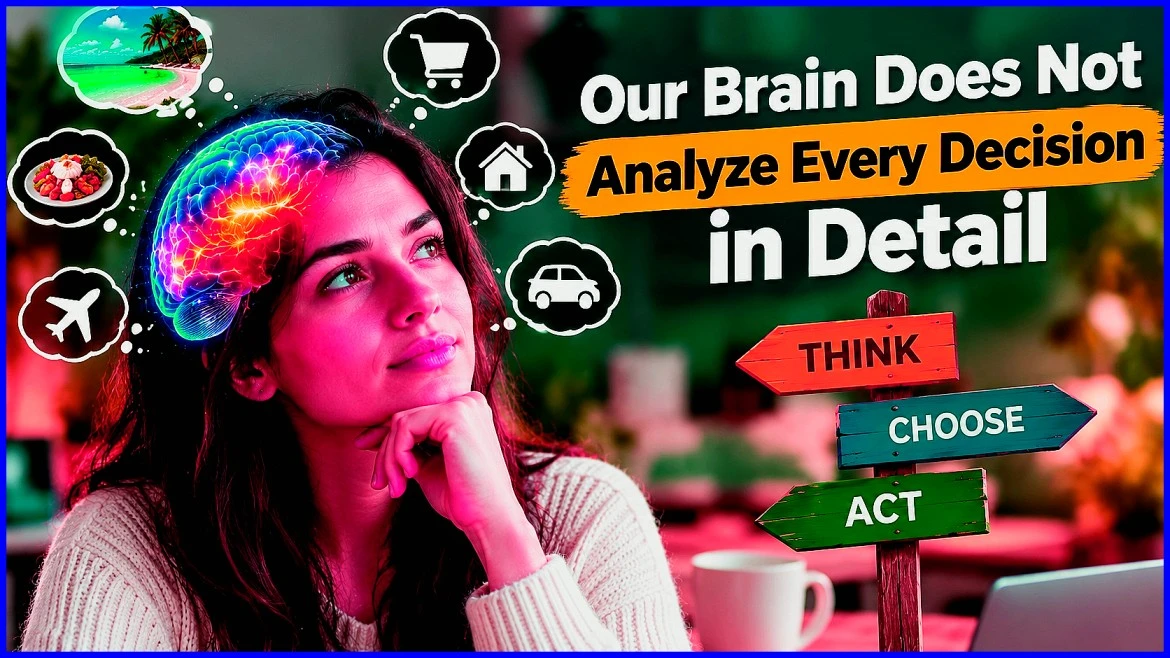
Imagine choosing what to eat for breakfast. You probably do not compare every possible meal, calculate its nutritional value, and examine every alternative. Instead, you may choose something familiar or convenient.
Our brains often use mental shortcuts to make everyday decisions more efficiently. These shortcuts can save time and effort, especially when we have limited information or need to act quickly.
However, mental shortcuts can sometimes lead to errors when a situation requires careful analysis.
What this means:
- Familiar options may feel easier to choose.
- We may overlook alternatives that deserve consideration.
- Important decisions often benefit from comparing the available options carefully.
The goal is not to analyze every small choice. It is to recognize when a decision deserves more attention.
2. Emotions Can Influence Our Decisions

Many people believe that good decisions come entirely from logic. In reality, emotions can influence how we evaluate risks, opportunities, and possible outcomes.
When you feel excited, you might focus more on potential rewards. When you feel anxious, you may pay greater attention to possible dangers. Anger, sadness, happiness, and fear can all affect the way a situation appears to you.
For example, someone who feels excited about a sale might purchase something they do not really need. Another person who feels anxious about failure might reject a promising opportunity.
How to make better decisions:
- Identify what you are feeling before making an important choice.
- Ask whether your emotions are helping you understand the situation or pushing you toward an immediate reaction.
- If possible, give yourself time to think before making a high-stakes decision.
Emotions are not automatically bad or irrational. They can provide useful information, but it helps to consider them alongside facts and long-term consequences.
3. Confirmation Bias Can Make Us Favor Our Existing Beliefs
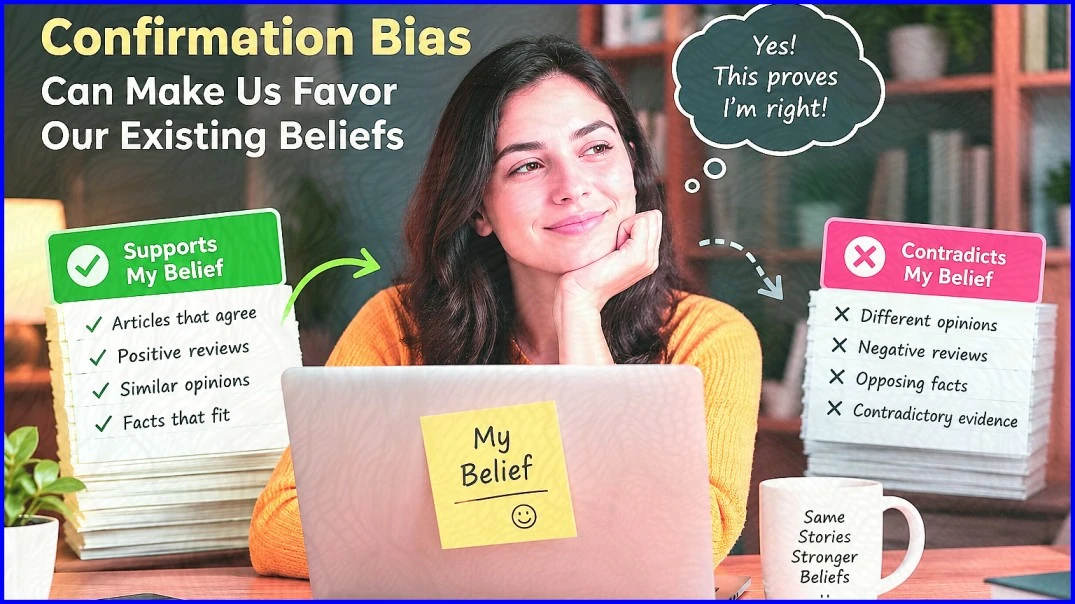
Have you ever searched online for information that supports something you already believed? This behavior can be related to confirmation bias.
Confirmation bias is the tendency to favor information that supports our existing beliefs while overlooking, dismissing, or giving less attention to information that challenges them.
For example, if you believe a particular investment is a great opportunity, you might focus on positive reviews and ignore credible warnings about its risks.
This does not mean that people always reject opposing information. Rather, existing beliefs can influence which information we notice, remember, and trust.
Ways to reduce confirmation bias:
- Look for reliable evidence that challenges your preferred conclusion.
- Consider more than one credible source.
- Ask yourself what evidence would change your mind.
- Separate facts from assumptions and personal opinions.
Being willing to question your own beliefs can help you make more balanced decisions.
4. The Anchoring Effect Can Make First Impressions More Influential

Imagine seeing a jacket originally priced at $200 and now offered for $100. The discount may make the jacket seem like a bargain because the original price acts as a reference point.
This is an example of the anchoring effect. It occurs when people rely heavily on an initial piece of information while making a judgment.
The first number, estimate, or impression you encounter can influence how you evaluate information that follows, even when that starting point is not particularly useful.
The anchoring effect can influence shopping, salary negotiations, price comparisons, and everyday estimates.
How to avoid being misled:
- Compare prices across different sellers.
- Check the actual quality and value of a product.
- Consider independent information instead of relying only on the first figure you see.
A lower price is not automatically a good deal. The important question is whether the product is worth the amount you are paying.
5. Loss Aversion Can Make the Fear of Losing Influence Our Choices
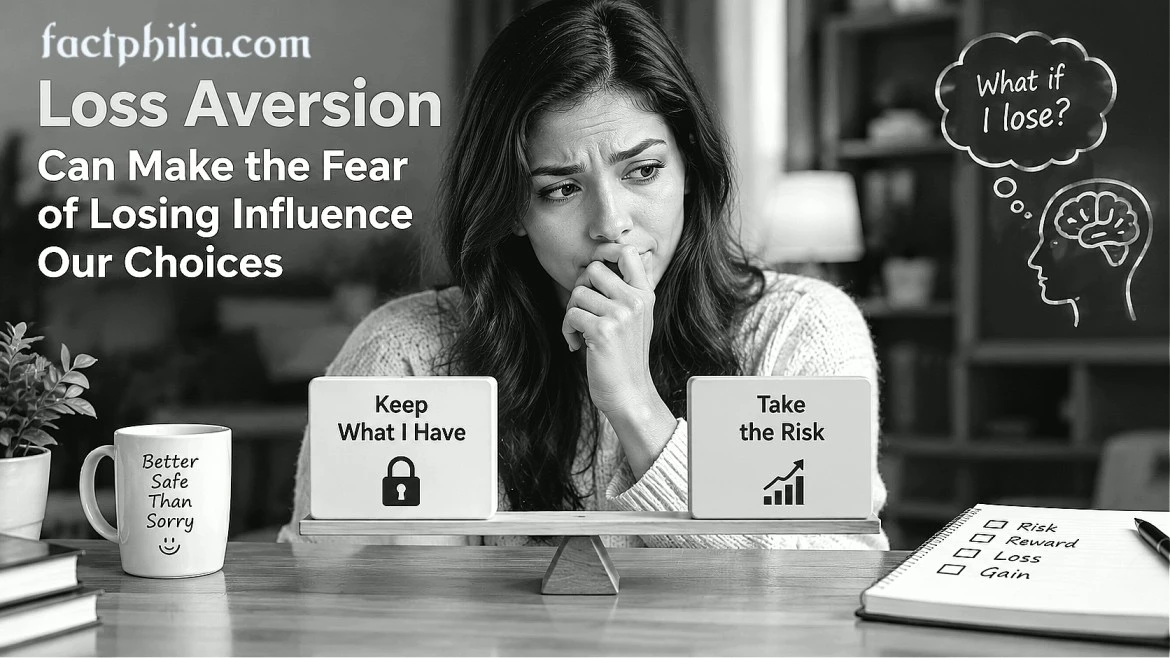
People do not always evaluate gains and losses in the same way. In many situations, the possibility of losing something can feel more significant than the possibility of gaining something of comparable value.
This tendency is known as loss aversion and is an important concept in behavioral economics and decision-making research.
For example, a person might continue paying for an unused subscription because canceling it feels like giving something up. Another person might avoid a reasonable opportunity because they are too focused on what could go wrong.
Fear of loss can sometimes prevent useful changes, although caution can also be appropriate when genuine risks are involved.
Ask yourself these questions:
- Am I keeping this option because it is genuinely useful?
- Am I avoiding change mainly because I fear losing something?
- What are the realistic benefits and risks of each choice?
Looking at both potential gains and potential losses can help you evaluate a decision more objectively.
6. The Availability Heuristic Can Make Memorable Events Seem More Common
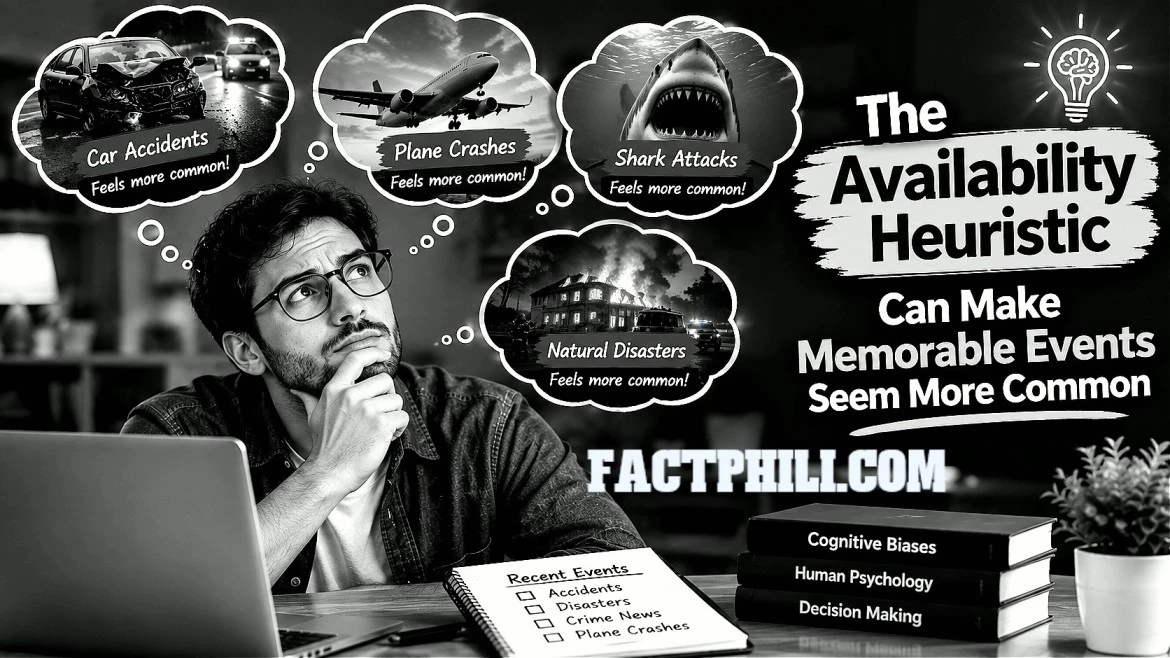
Think about a frightening news story you recently watched. If it stays in your memory, you might begin to feel that the event is more common than it actually is.
This can happen because the availability heuristic leads people to estimate how likely something is by considering how easily examples come to mind.
Vivid, emotional, or recently encountered events are often easier to remember. As a result, they can have a strong influence on our judgments about risk and probability.
For example, after hearing several stories about online scams, someone might become especially worried about every online transaction, even though the actual risk varies depending on the situation and the precautions taken.
How to think more accurately:
- Check reliable statistics instead of relying only on memorable stories.
- Distinguish between how easily an event comes to mind and how frequently it actually occurs.
- Consider the broader evidence before judging the level of risk.
A memorable example can be important, but it does not always represent the full picture.
7. Overconfidence Bias Can Make Us Overestimate Our Abilities

Confidence can help people take action, learn new skills, and pursue opportunities. However, excessive confidence can sometimes cause people to underestimate uncertainty or overestimate their knowledge.
This tendency is commonly discussed as overconfidence bias.
For example, someone might assume they can complete a complicated project in one day without considering possible delays. An inexperienced investor might also believe they can predict market movements more accurately than the available evidence supports.
Overconfidence can lead to poor planning, unnecessary risks, and decisions made without enough information.
How to keep your confidence balanced:
- Check your assumptions before acting.
- Consider what you do not know.
- Ask experienced people for feedback when appropriate.
- Review your past predictions to see whether they were accurate.
Healthy confidence means believing you can learn and improve while remaining open to evidence that challenges your expectations.
8. Decision Fatigue: Making Many Choices Can Feel Mentally Exhausting

After a long day of work, even a simple decision can sometimes feel difficult. Choosing what to eat, replying to messages, or deciding what to do next may require more effort than usual.
The term decision fatigue is often used to describe the feeling of becoming mentally worn out after making many decisions. However, the scientific evidence is more nuanced than the idea that every decision simply drains a fixed amount of willpower.
Stress, lack of sleep, workload, time pressure, and the complexity of choices can all affect how well we make decisions.
When we feel overloaded, we may put off decisions, choose the easiest option, or rely more heavily on familiar routines.
Practical ways to make decision-making easier:
- Create routines for repetitive tasks.
- Prepare meals, clothes, or work priorities in advance when useful.
- Break complicated decisions into smaller steps.
- Take reasonable breaks and protect your sleep.
You do not need to eliminate every small choice. Instead, simplify repetitive decisions so you can give more attention to the ones that matter most.
9. Other People’s Opinions Can Influence Our Decisions

Human beings are social. We often consider the opinions, experiences, and behavior of other people when deciding what to believe or how to act.
For example, a product with thousands of positive reviews might appear more trustworthy than an unfamiliar alternative. Similarly, someone might follow a popular trend because many people around them seem to approve of it.
Social information can be helpful, especially when we lack experience. However, following others without evaluating the evidence can sometimes lead to poor choices.
In group settings, people may also hesitate to disagree with the majority. In some circumstances, this can contribute to groupthink, where maintaining agreement becomes more important than carefully evaluating alternatives.
How to make independent decisions:
- Consider whether other people’s opinions are based on reliable information.
- Read both positive and negative reviews.
- Think about your own needs rather than following a trend automatically.
- Encourage respectful disagreement when making decisions as a group.
Other people’s experiences can offer valuable guidance, but the final choice should reflect the evidence and circumstances relevant to you.
10. Better Decision-Making Is a Skill You Can Develop




Pingback: Why Do We Put Off Important Tasks? 10 Psychological Reasons and Ways to Overcome Them - FACT Philia