
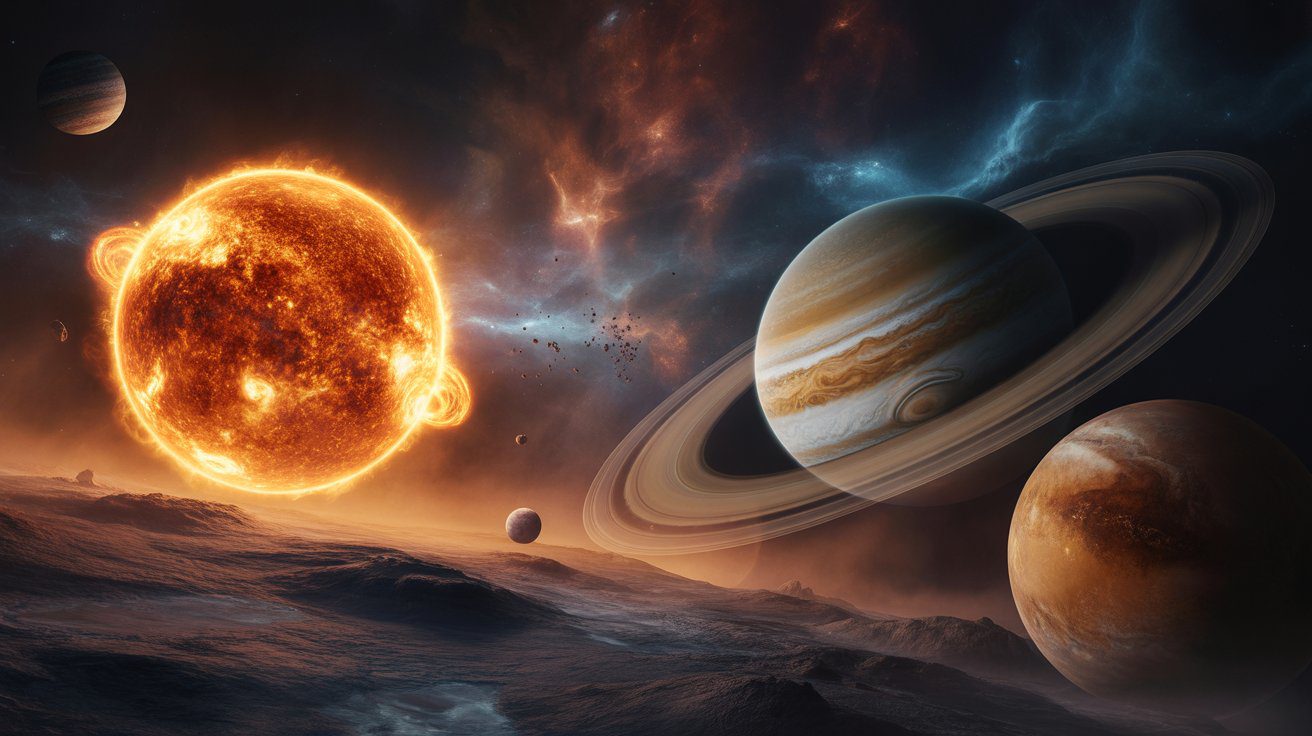
🌌 5 Unbelievable Facts: Solar System Secrets You Never Knew
Hello friends!
5 Unbelievable Facts: Solar System Secrets You Never Knew – In today’s vlog-style post, I’m taking you on a journey into five astonishing, mind-blowing, and rarely discussed secrets of our Solar System — the kind of facts you won’t easily find in science textbooks.
These are mysteries that even scientists are still trying to fully understand.
So let’s begin this exciting cosmic journey! 🚀🌍
🌟 Fact 1: The Sun Isn’t Stable — It Loses 1.5 Million Tons of Mass Every Second!
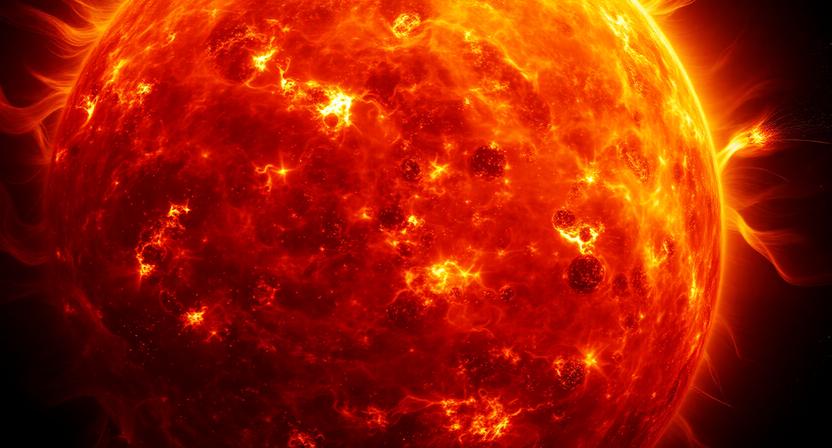
(Yes, the Sun is slowly disappearing!)
The Sun may look like a calm, steady ball of fire, but in reality, it’s incredibly active.
The Sun loses 1.5 million tons of mass every single second.
Where does this mass go?
Through nuclear fusion, the Sun converts mass into energy.
As this energy radiates into space, the lost mass is converted and gone forever (Einstein’s E=mc²).
Will this affect Earth?
Yes, but only in the very distant future.
In about 5 billion years, the Sun will change so much that life on Earth won’t be possible.
🌞 Simple explanation:
The Sun is shrinking — very slowly, but constantly.
🌟 Fact 2: Jupiter Is the Real ‘Vacuum Cleaner’ of the Solar System
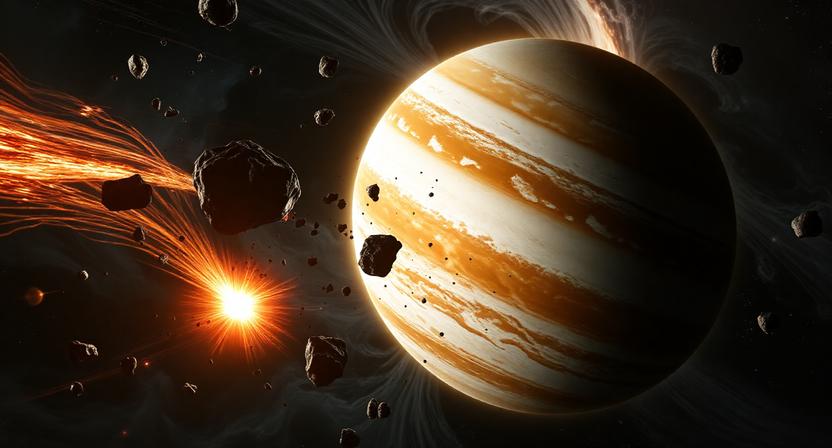
(It protects Earth again and again!)
Jupiter’s gravity is so powerful that it pulls dangerous comets and asteroids toward itself or changes their paths.
What if Jupiter didn’t exist?
Earth would face frequent catastrophic asteroid collisions.
Just like the one that wiped out the dinosaurs — and possibly even worse.
That’s why it’s called the “Cosmic Shield”.
💡 Amazing Fact:
🪐 A day on Jupiter lasts only about 10 hours, making it the shortest day of any planet in our solar system.
Jupiter spins incredibly fast on its axis, completing one full rotation in less than half an Earth day. This rapid rotation creates powerful jet streams, massive storms, and the planet’s famous striped appearance. Because Jupiter is a gas giant with no solid surface, different parts of its atmosphere rotate at slightly different speeds, adding to its dynamic and ever-changing weather patterns. Its fast spin also causes the planet to bulge at the equator and flatten at the poles, giving Jupiter its uniquely oblate shape.
The planet spins extremely fast!
🌟 Fact 3: Venus Isn’t Earth’s Twin — It’s More Like Hell

(Earth’s twin? No, Earth’s nightmare!)
We often hear that Venus is Earth’s twin planet.
But the truth is, Venus is a scorching, poisonous gas chamber.
Why is Venus so dangerous?
- Temperature: 475°C or more
- Atmosphere: 96% toxic carbon dioxide
- Clouds: sulfuric acid rain
- Pressure: 90 times stronger than Earth (like being 900m underwater)
Venus’ sunrise is backwards
It rotates in the opposite direction —
so the Sun rises in the west.
🔥 Conclusion:
Venus is not a twin planet — it’s a warning of what runaway climate change can do.
🌟 Fact 4: Saturn’s Rings Are Stunning — But They Are Disappearing!
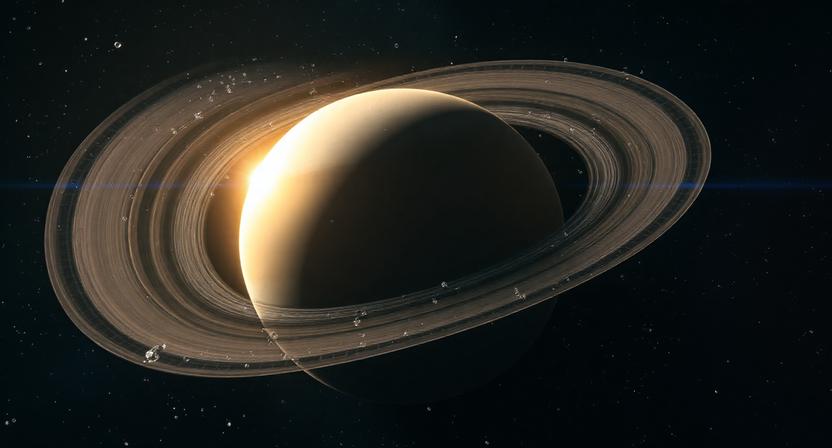
(The rings are dying slowly…)
Saturn’s rings look magical, but scientists have discovered that they are slowly vanishing.
Why are the rings disappearing?
Ice and dust from the rings are constantly being pulled toward Saturn by gravity.
This phenomenon is called Ring Rain.
How long will they last?
Only about 100–200 million years more.
🪐 Hidden truth:
Saturn’s beautiful rings are temporary — not permanent.
🌟 Fact 5: There May Be a Hidden Planet in Our Solar System — Planet Nine
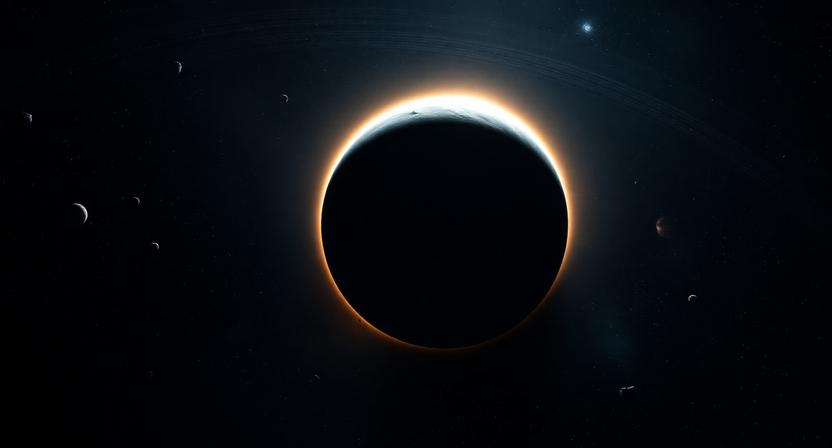
(Yes! A secret planet might be out there.)
Scientists haven’t fully proven it yet, but many believe a massive, invisible planet exists beyond Neptune — known as Planet Nine.
Why do scientists think it exists?
Several distant objects in space follow orbits that suggest something huge is pulling them —
possibly a hidden planet.
What might this planet be like?
- Size: 5–10 times larger than Earth
- Orbit: so huge it takes 10,000–20,000 years to complete one revolution
- Completely hidden in darkness
Planet Nine is the biggest mystery in our Solar System today.
🌌 Conclusion: The Solar System Is Full of Surprises
These five facts show that our Solar System is far more dynamic, mysterious, and surprising than it looks.
A shrinking Sun, Jupiter acting as Earth’s protector, poisonous Venus, dying Saturn rings, and a possibly hidden giant planet —
all prove that the universe is full of secrets waiting to be discovered.
🎥 Vlog-Style Closing:
If you enjoyed these Solar System secrets,
👉 share this post,
👉 comment which fact surprised you the most,
and 👉 stay connected for more amazing space facts! 🚀✨
Visit My Blog For More interesting facts
Suggested Read
Top 5 Unbelievable Facts About Space That Will Blow Your Mind!
🌍 Top 5 Hidden Secrets of Our World – Mysterious Facts You Won’t Believe Exist
Top 10 Mysterious Myths and Legends That Might Be True!
Top 10 Most Luxurious 7-Star Hotels in America – A Dream Stay Experience!
Follow Us On Social Media👇
FAQ. Frequency Ask Questions
What are the most unknown facts about our Solar System?
Our solar system holds many surprising secrets that most people are unaware of. For example— the Sun is actually white, Saturn’s rings are disappearing, Uranus rotates on its side, and some moons hide massive oceans beneath their icy surfaces. Scientists continue to uncover new mysteries every year, proving how strange and fascinating our Solar System truly is.
Is the Sun really yellow, or is its color something else?
The Sun is not yellow—it’s actually white Earth’s atmosphere scatters its light, making it appear yellow from the ground. But from space, the Sun shines as bright white.
Do other planets have different lengths of day and night compared to Earth?
Yes, each planet has its own unique day and night duration. For example—
* A single day on Venus is equal to 243 Earth days.
* Jupiter holds the record for the shortest day in our entire Solar System — completing one full rotation in just about 10 hours**.
These differences occur due to the varying rotation speeds of planets.
Do any planets or moons have ‘floating oceans’ or hidden water beneath the surface?
Yes! Several moons in our Solar System contain enormous oceans under their icy crusts. For example—
* Europa(moon of Jupiter)
* Enceladus (moon of Saturn)
These subsurface oceans may even have conditions suitable for life.
When and how will Saturn’s rings disappear?
Saturn’s beautiful rings are not permanent. According to scientists, they may vanish completely within 100 to 300 million years. The rings are slowly falling toward Saturn due to gravity, forming a rain of dust, gas, and icy particles.
Are there planets outside our Solar System? How are they discovered?
Yes, there are thousands of planets beyond our Solar System, called **exoplanets**.
Scientists discover them using two major techniques:
1. Transit Method – When a planet passes in front of a star, the star’s brightness slightly dims.
2. Radial Velocity – The small wobble of a star reveals a planet’s gravitational pull.
Can solar-system-like planetary systems exist near black holes?
It is possible but extremely rare. Black holes have powerful gravity that can destroy planets. Yet, in some regions, scientists have observed discs of gas and dust around black holes where new stars and planets may form.
Does Earth have a second ‘moon’?
Yes, Earth has a small “quasi-moon” named 469219 Kamo’oalewa.
It’s not a true moon, but it orbits the Sun in sync with Earth, making it appear like a tiny companion. It’s also called our mini-moon.
Which locations in our Solar System experience the most extreme heat and the harshest cold?
* Hottest: The Sun’s core, with temperatures around 15 million°C.
* Coldest: Pluto and distant icy bodies, where temperatures can drop to –240°C.
Can the Solar System ever be destroyed?
Yes, but not anytime soon. In about 5 billion years, the Sun will expand into a Red Giant, destroying or altering nearby planets including Earth. Eventually, the Sun will shrink into a White Dwarf, leaving behind a very different Solar System.
Related Stories


7 Dark Psychology Facts About Yourself That You’re Ignoring Right Now
7 Dark Psychology Facts About Yourself That You’re Ignoring Right Now Have you over wondered…
The Psychology of Love vs Lust: 8 Scientific Differences You Must Understand
The Psychology of Love vs Lust: 8 Scientific Differences You Must Understand Introduction Hello friends,…

5 Body Language Signals of Attraction That Secretly Reveal Someone Likes You
5 Body Language Signals of Attraction That Secretly Reveal Someone Likes You Introduction Have you…
Why We Fall for the Wrong Person – 9 Psychological Reasons You Should Know
Why We Fall for the Wrong Person – 9 Psychological Reasons You Should Know It’s…

7-Star Hotels in India: Prices, Locations, and Luxury Experiences
7-Star Hotels in India: Prices, Locations, and Luxury Experiences ✨ Introduction India offers a unique…
How Your Brain Decides Who You Like in 3 Seconds – The Hidden Science of Attraction
How Your Brain Decides Who You Like: First Impression Science ✍️ Introduction What if your…


Leave a Reply