Top 10 Shocking Space Discoveries in 2026 That Are Changing Our Understanding of the Universe
The year 2026 has turned out to be a groundbreaking period for space science, bringing discoveries that are changing how we understand the universe. From mysterious signals in deep space to unexpected findings on distant planets, scientists have uncovered facts that were once impossible to imagine. In this article, we explore the 10 Shocking Space Discoveries in 2026 that are not only surprising but also reshaping the future of space exploration.
The 10 Shocking Space Discoveries in 2026 reveal groundbreaking advancements in space missions, new planet discoveries, cutting-edge rocket technology, and AI-driven research. These incredible findings are transforming our understanding of the universe and opening new possibilities for the future of humanity. 🚀
The 10 Shocking Space Discoveries in 2026
90% of people fail this quiz! 😲 Are you among those 10%? Try it now and see your score.
10 Shocking Space Discoveries in 2026
Get ready to challenge your mind with the most mind-blowing space discoveries of 2026! From mysterious signals to hidden planets, this quiz will test how much you really know about the universe. Dive in now and see if you can uncover the secrets of space before anyone else! 🚀
📝 Questions: 10
⏱ Time: None
🎯 Pass Mark: 60%
📁 Category: Facts about Space & Universe
Instructions:
All required questions must be answered.
Avoid refreshing or going back once started.
Your score and results will be shown at the end.
10 Shocking Space Discoveries in 2026
📝 10 Questions
0/10
Table of Contents
1 🌕 Artemis Mission: Humanity’s Return to the Moon in 2026
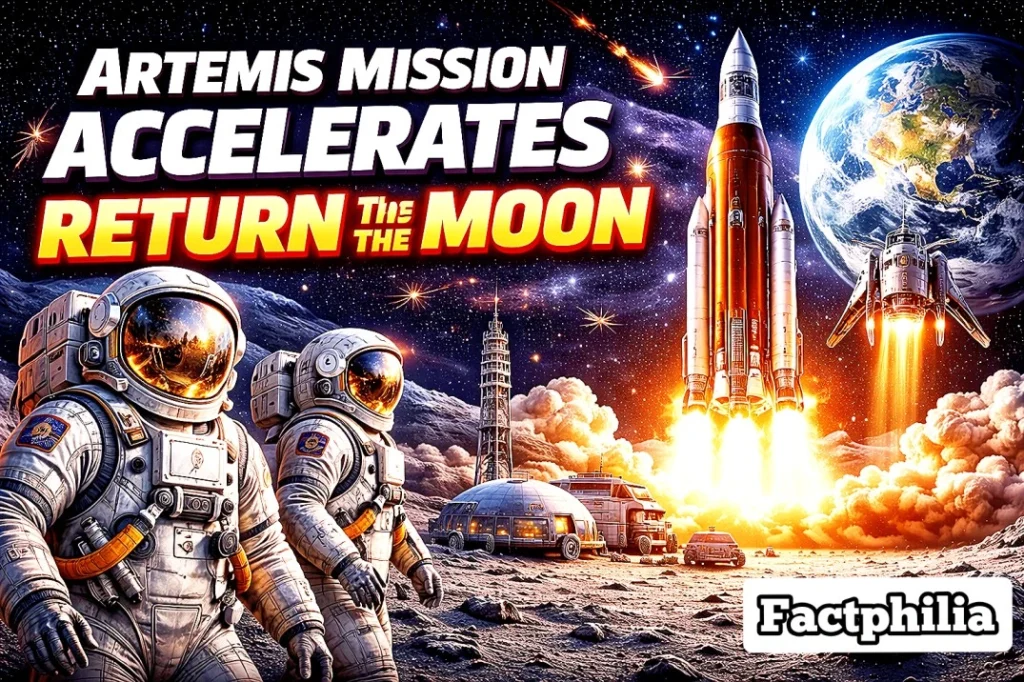
One of the biggest highlights in the 10 Shocking Space Discoveries in 2026 is the rapid progress of NASA’s Artemis mission. After decades, humanity is closer than ever to returning to the Moon—not just for exploration, but for long-term settlement.
The Artemis program is designed to take space exploration beyond short visits. As highlighted in the 10 Shocking Space Discoveries in 2026, scientists and engineers are actively testing advanced spacecraft, next-generation spacesuits, and precision landing systems to ensure safe human missions to the lunar surface. This mission represents a major leap in modern space technology.
Unlike previous missions, Artemis focuses on building a sustainable human presence on the Moon. The goal is to create a lunar base that can support long-duration stays, opening the door for deeper space exploration and future missions.
Another remarkable aspect of this mission is its global and inclusive approach. The 10 Shocking Space Discoveries in 2026 also emphasize how Artemis aims to send the first woman and astronauts from diverse backgrounds to the Moon, marking a historic shift in space exploration.
🌕 Key Highlights of the Artemis Mission
Human Return to the Moon – Astronauts will step on the lunar surface again after nearly 50 years.
Lunar Base Development – Plans for a long-term human settlement are underway.
Advanced Technology – Use of modern rockets, AI systems, and navigation tools.
Inclusive Space Missions – First woman and diverse crew participation.
Gateway to Mars – The Moon will act as a testing ground for future Mars missions.
🚀 Why It Matters
The Artemis mission is not just a return to the Moon—it is a stepping stone toward becoming a multi-planetary civilization. It is redefining how humans explore space and shaping the future of interplanetary travel.
Artemis is not just a mission—it’s the beginning of a new era where humans expand beyond Earth and redefine the future of space exploration.
2. 🇮🇳 A Big Leap in India’s Space Power
India has rapidly emerged as a strong force in space technology, led by the Indian Space Research Organisation (ISRO). Through successful lunar and solar missions, the country has strengthened its global presence and proved its capability in advanced space research.
From achieving a historic soft landing on the Moon’s south pole to launching the Sun study mission and preparing for the human spaceflight program, Gaganyaan, India is moving beyond participation towards leadership in space.
Major achievements of India’s space progress:
Success in lunar missions – Soft landing on the Moon’s south pole gave India a special place on the global map.
Sun Study Mission – India has conducted advanced research to understand solar activity and solar storms.
Human Space Mission (Gagan yaan) – Under this mission, India is preparing to send Indian astronauts into space.
Affordable launch services – India has won the trust of global customers by launching satellites at low costs.
Private participation – Due to India’s achievements, the role of private startups in the space sector is increasing today.
With cost-effective satellite launches and growing private sector involvement, India is building a future focused on innovation, self-reliance, and global impact in space science. 🚀
3. New Discoveries from Mars Missions
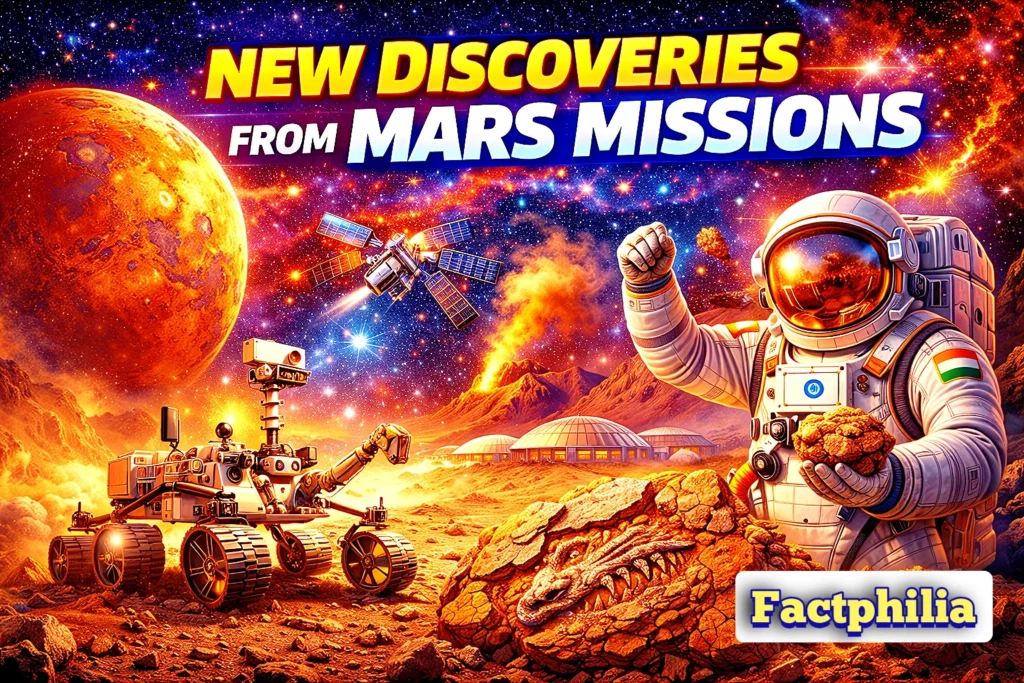
Mars has become one of the most exciting targets for space exploration. Recent robotic missions have revealed strong evidence of water, ancient river systems, and new minerals on the planet.
Missions like Perseverance Rover and research by the European Space Agency have detected organic molecules in Martian soil, suggesting that Mars once had conditions that may have supported life.
Scientists have also discovered signs of underground ice and studied Mars’ thin atmosphere to understand its past environment. Future missions aim to bring soil samples back to Earth for deeper analysis.
With ongoing research and advancing technology, Mars is no longer just the “Red Planet” — it is now seen as a possible destination for future human exploration.
Major New Discoveries from Mars Missions:
Signs of Water – Evidence of underground ice and ancient water sources beneath the surface.
Organic Molecules – Detection of key chemical compounds that may support life.
Atmospheric Studies – Analysis of gases in Mars’ thin atmosphere to understand its past.
Soil Sample Collection – Future plans to bring Martian samples back to Earth for detailed research.
Human Mission Preparation – Development of technologies and resources for possible human habitation.
4. The entry of private companies has accelerated the pace.
The participation of private companies in the space sector has significantly accelerated research and innovation. Earlier dominated by government agencies, the industry is now driven by competition, advanced technology, faster launches, and reduced costs.
Rise of Private Space Companies
🔹 Key Changes:
Faster Rocket Launches – Reusable rocket technology is reducing both time and cost.
Low-Cost Missions – Opening opportunities for smaller nations and startups.
Space Tourism – Making space travel possible for civilians in the future.
Technological Advancements – Increasing use of AI and automation in missions.
Global Competition – Rapid growth and investment across the space industry.
🔭 A New Era of Space Observation
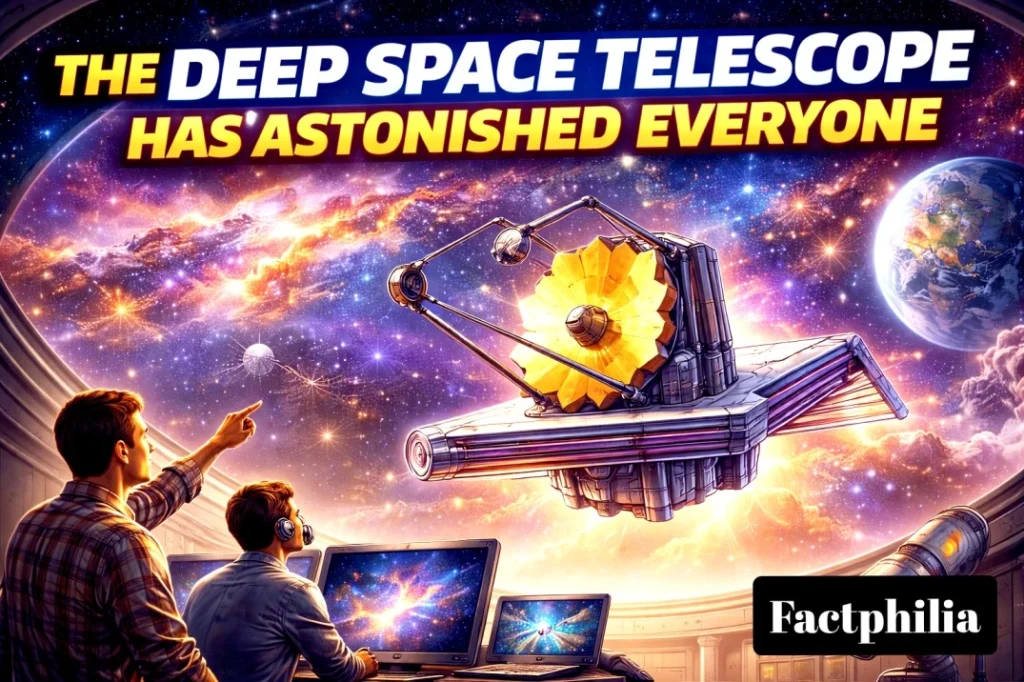
The James Webb Space Telescope has amazed scientists with its groundbreaking discoveries. It has captured stunning images of distant galaxies and the early universe, helping researchers better understand how the universe was formed.
🔭 5. The James Webb Space Telescope’s Incredible Discoveries
The James Webb Space Telescope has transformed our understanding of the universe. It has captured detailed images of distant galaxies formed billions of years ago, offering a glimpse into the early stages of cosmic history.
Using advanced infrared technology, the telescope can observe through dust and gas clouds, helping scientists study the birth of stars and planets more clearly than ever before. These discoveries are providing valuable insights into how the universe evolved over time.
🔹 Key Achievements:
Ancient Galaxies – Observation of some of the earliest galaxies formed after the Big Bang.
Exoplanet Analysis – Detection of water vapor and gases in distant planetary atmospheres.
Star Formation – Detailed study of how new stars are born.
Early Universe Insights – Improved understanding of the universe’s formation and evolution.
This telescope marks a major step forward in space research and continues to reveal new cosmic mysteries.
6. Improved Prediction of Solar Storms☀️
Advancements in solar observation missions have significantly improved our ability to forecast solar storms. These powerful bursts of energy from the Sun can disrupt satellites, GPS, radio signals, and even power grids on Earth.
Space agencies like NASA and Indian Space Research Organization are continuously monitoring solar activity, enabling early warnings and better preparedness against potential disruptions.
🔹 Key Advancements and Benefits:
Real-Time Monitoring – Continuous tracking of solar eruptions and activity.
Satellite Protection – Early alerts allow satellites to switch into safe mode.
Communication Safety – Helps minimize disruptions in GPS and radio signals.
Power Grid Security – Supports preventive measures against electrical failures.
Astronaut Safety – Reduces radiation risks during space missions.
Improved solar storm forecasting is becoming essential for protecting modern technology and ensuring a safer space environment. 🌍
7. Space Tourism: From Dream to Reality
Space tourism is gradually turning from a dream into reality. While space travel was once limited to astronauts, private companies are now opening new opportunities for civilians to experience space.
Companies like SpaceX and Blue Origin are leading this transformation by offering suborbital and orbital travel experiences. However, these journeys are still expensive and mainly accessible to a limited number of people.
🌍 Key Features of Space Tourism:
Suborbital Flights – Short trips to the edge of space with a view of Earth.
Zero Gravity Experience – Experiencing weightlessness for a few minutes.
Special Training – Basic safety and health preparation before flights.
Future Space Stations – Plans for private orbital hotels.
Growing Space Economy – New business, investment, and job opportunities.
As technology improves, the cost of space travel is expected to decrease, making it more accessible in the future. Space tourism represents a new era where travel may extend beyond Earth.
8. Reusable Rockets: Cutting Costs and Transforming Space Travel
One of the most important breakthroughs behind the “10 Shocking Space Discoveries in 2026” is the rise of reusable rocket technology. It has dramatically lowered the cost of space missions and opened new opportunities for both governments and private companies.
Earlier, rockets were used only once, making launches extremely expensive. Today, advanced systems allow rocket boosters to safely return to Earth and be used again, saving both time and resources.
Companies like SpaceX, with its Falcon 9, and Blue Origin are leading this innovation and redefining how space missions are conducted.
Faster Turnaround – Rockets can be prepared and launched again quickly.
Environmental Benefits – Less space debris and efficient use of resources.
Greater Accessibility – Smaller countries and startups can now enter the space sector.
Boost in Innovation – Increased competition is accelerating technological progress.
Reusable rocket technology is not just reducing costs—it is reshaping the future of space exploration and making deep space missions more achievable than ever before.
9. Breakthrough in Exoplanet Discovery
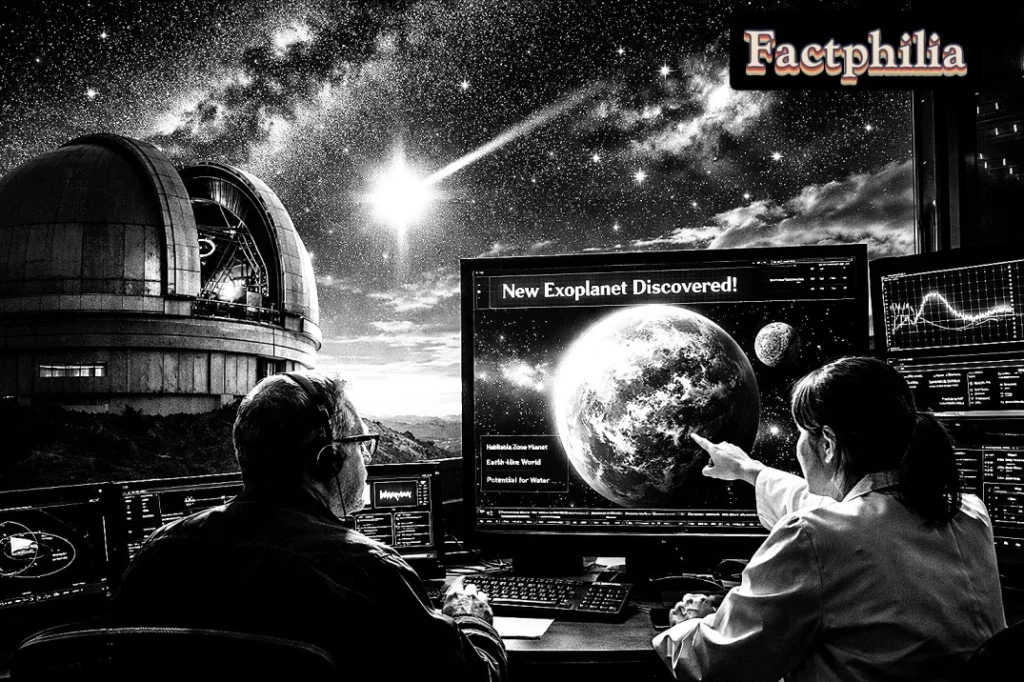
Another major highlight from the 10 Shocking Space Discoveries in 2026 is the rapid progress in discovering exoplanets—worlds beyond our solar system. With advanced technology, scientists are now identifying planets that could potentially support life.
Using powerful instruments like the James Webb Space Telescope, researchers are analyzing the atmospheres of distant planets and uncovering key details about their composition and environment.
🔭 Key Achievements:
Earth-like Planets – Discovery of planets located in the habitable zone.
Atmospheric Detection – Identification of gases like water vapor, methane, and carbon dioxide.
Signs of Habitability – Study of conditions that may support life.
Advanced Imaging – More precise and detailed observation of distant worlds.
Future Exploration Plans – Upcoming missions focused on finding life beyond Earth.
These discoveries are bringing us closer to answering one of humanity’s biggest questions: Are we alone in the universe?
🤖 10. AI Revolution in Space Missions
The growing role of Artificial Intelligence is one of the most exciting highlights of the 10 Shocking Space Discoveries in 2026. AI is transforming how space missions are planned, executed, and analyzed.
Leading organizations like NASA and Indian Space Research Organisation are using advanced AI systems to handle complex data, improve navigation, and automate critical operations in space.
🚀 Key Uses of AI in Space:
Data Analysis – Rapid processing of massive data from telescopes and rovers.
Autonomous Navigation – Spacecraft can adjust their paths without human intervention.
Robotic Operations – Smarter control of rovers and exploration robots.
Hazard Detection – Early identification of solar storms and technical risks.
Fuel Optimization – Efficient use of resources during missions.
AI is making space exploration smarter, safer, and more efficient, shaping the future of how humans explore the universe. 🌌
🔚 Conclusion
The 10 Shocking Space Discoveries in 2026 clearly show that humanity has entered a new era of space exploration. With the help of advanced technologies, powerful telescopes, Mars missions, and AI-driven systems, space science is evolving faster than ever before.
These discoveries are not just scientific achievements—they offer a glimpse into the future. From preparations for returning to the Moon to exoplanet exploration and the rise of space tourism, each development is shaping a new chapter in human progress.
Overall, the 10 Shocking Space Discoveries in 2026 remind us that space is no longer out of reach. It is becoming more accessible, opening endless possibilities for exploration, innovation, and discovery.
The 10 Shocking Space Discoveries in 2026 are just the beginning—there are many more mind-blowing secrets of the universe waiting to be uncovered. If you’re curious to explore deeper and stay updated with the latest space facts, don’t stop here—dive into more amazing content on our blog and expand your knowledge beyond the stars.
What was the biggest achievement in space research in 2026?
Moon missions, new discoveries on Mars, and images from advanced space telescopes were the biggest achievements in 2026. These missions further clarified the origins of the universe and paved the way for future human missions.
Will humans return to the Moon in 2026?
Many space agencies have accelerated preparations for human missions to the Moon by 2026. New technology and international collaboration are bringing this goal closer to reality.
What new discoveries were made in Mars missions in 2026?
Signs of water on Mars, the identification of organic molecules, and the collection of soil samples are major achievements in 2026, which could prove crucial for future human missions.
Has space tourism become a reality in 2026?
Yes, in 2026, private companies have begun offering limited space tourism to ordinary citizens, making space travel no longer limited to scientists.
How will AI and new technology change space research in 2026?
AI-based systems have made data analysis, navigation, and risk identification more accurate, making space missions safer and more successful than ever before.

















Leave a Reply