Top 10 Space Exploration Facts in 2026 That Will Shock You
Did you know that 2026 has become a historic year for space exploration? It has astonished the entire world with its new technologies, lunar missions, Mars missions, and deep space exploration. In this article, we will explore the 10 most surprising space exploration facts of 2026 that may change your mind.
Top 10 Space Exploration Facts in 2026 provide exciting insights into space missions, the discovery of new planets, advanced rocket technology, and AI-based space research. Space exploration in 2026 has given new directions to science and the future of humanity, astonishing the world. 🚀
Top 10 Space Exploration Facts in 2026
90% of people fail this quiz! 😲 Are you among those 10%? Try it now and see your score.
Results
#1. Q1. Which country is preparing to send a human mission to the Moon’s South Pole in 2026?
#2. Q2. Which country has the most active rovers on Mars by 2026?
#3. Q3. Who is expected to be the biggest private player in space tourism in 2026?
#4. Q4. Which telescope will deliver shocking new images of the deep universe in 2026?
#5. Q5. Why hasn’t Planet Nine been discovered yet?
#6. Q6. What is the main goal of the Artemis Program?
#7. Q7. Which mission aims to study Jupiter’s icy moon Europa in 2026?
#8. Q8. Which company has achieved the most success in reusable rocket technology?
#9. Q9. What is the future of the International Space Station in 2026?
#10. Q10. What is the biggest space mystery in 2026?
Previous
Finish
Table of Contents
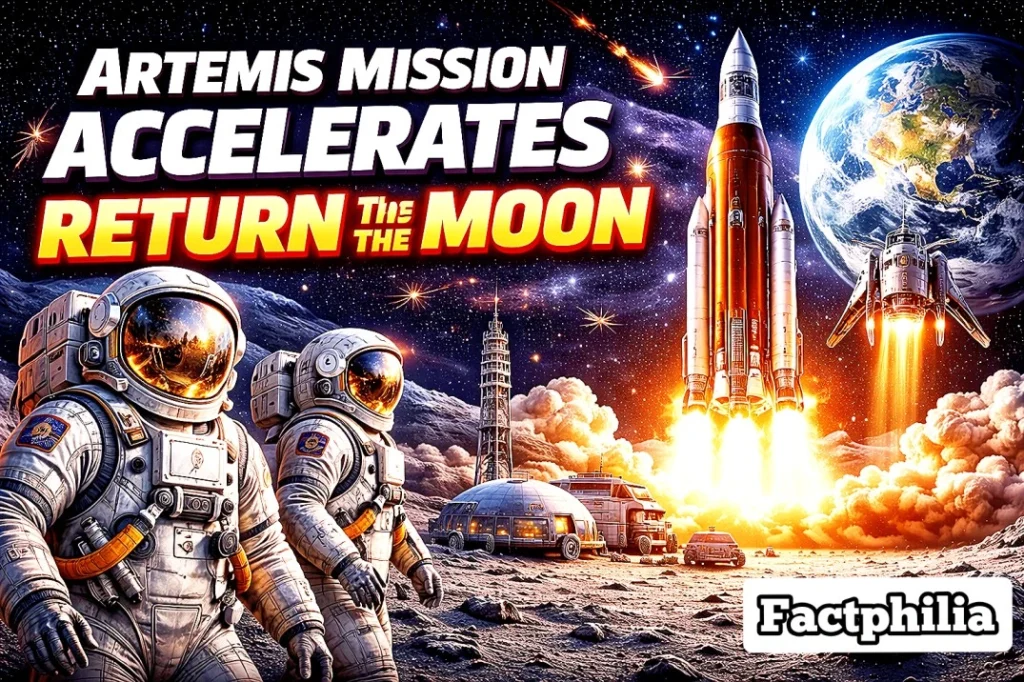
1 🌕 Artemis Mission Accelerates Return to the Moon
NASA’s Artemis program has made significant progress toward returning humans to the Moon. Preparations for a permanent base on the lunar surface in 2026 are underway and new technologies are being tested.
NASA’s Artemis mission is the most ambitious plan to return to the Moon in human history. Its aim is not only to send astronauts to the Moon, but also to establish a permanent place for long-term stay there. By 2026, the mission has made significant progress through technology testing, spacecraft development, and international cooperation.
The Artemis program is also considered a foundation for preparing for future Mars missions. This mission is working on new-generation space technologies, safe landing systems, and advanced spacesuits.
🌕 Key features of the Artemis mission:
Human Return – Plans to send astronauts to the Moon again after nearly 50 years.
Lunar Base Preparation – Research toward building a permanent base on the lunar surface.
Use of New Technology – Use of modern rockets and advanced navigation systems.
Women and Diversity Representation – Initiatives to include the first female and astronauts from diverse backgrounds. Now, women will also become astronauts.
Foundation for Future Mars Missions – Developing the Moon as a training ground for deep space exploration.
The Artemis mission is not just a space mission, but the beginning of the next major step in the evolution of human civilization, giving us the opportunity to understand the entire world beyond Earth.
ISRO has strengthened its global presence through its lunar and solar missions in 2026. India is now playing a major role in deep space communication and space technology, a significant achievement for India.
India’s rapid progress in the space sector over the past few years has attracted global attention. The Indian Space Research Organization (ISRO) has proven its position as a strong and reliable force in space research through high-tech and precision missions within a limited budget.
From lunar missions to solar studies and preparations for human spaceflight, India is no longer just participating but also moving towards leadership. By 2026, India will have achieved significant achievements in deep space communication, satellite launches, and scientific research.
Major achievements of India’s space progress:
Success in lunar missions – Soft landing on the Moon’s south pole gave India a special place on the global map.
Sun Study Mission – India has conducted advanced research to understand solar activity and solar storms.
Human Space Mission (Gagan yaan) – Under this mission, India is preparing to send Indian astronauts into space.
Affordable launch services – India has won the trust of global customers by launching satellites at low costs.
Private participation – Due to India’s achievements, the role of private startups in the space sector is increasing today.
This space leap for India is not just a technological achievement, but a strong step towards scientific self-reliance and global leadership. In the coming years, India can achieve even greater achievements in space science, which will play a crucial role in taking India to the forefront of the world.🚀
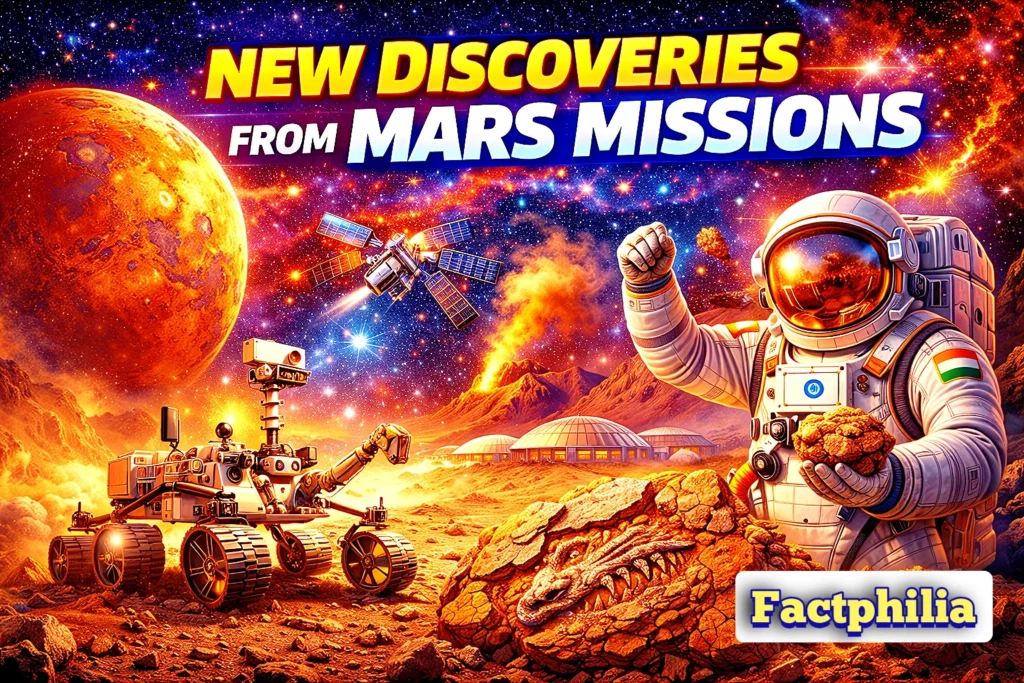
3. New Discoveries from Mars Missions
Robotic missions to Mars have discovered signs of water and new minerals. This has given scientists insights into the possibility of life on Mars. Scientists believe that Mars could become a potential destination for human habitation in the future.
Mars a Fascinating Planet for Scientists
Mars has long been a significant and fascinating destination for scientists and space agencies. In recent years, Mars missions have made numerous truly astonishing discoveries, strengthening the possibility that conditions conducive to life may have once existed on Mars. By 2026, robotic rovers and orbiters have returned crucial data about Mars’ surface, atmosphere, and geological structure.
NASA’s Perseverance rover and missions from the European Space Agency have discovered traces of organic molecules in Martian soil, clearly indicating that life was once possible on this soil. Evidence of ancient rivers and lakes has also been found on Mars’ surface, suggesting that water flowed there billions of years ago. And if water existed there billions of years ago, life must have flourished in some form.
Major new discoveries from Mars missions:
Signs of water – evidence of ice and ancient water sources beneath the surface.
Organic molecules – identification of potential chemical elements for life.
Atmospheric studies – analysis of the composition of gases in Mars’ thin atmosphere.
Collection of soil samples – plans to bring them back to Earth in the future and study them in detail.
Preparation for human missions – exploration of habitable technologies and resources.
These discoveries have elevated Mars from just a red planet to a planet with potential for future human habitation. Scientists believe that Mars missions could uncover even greater mysteries in the coming years.
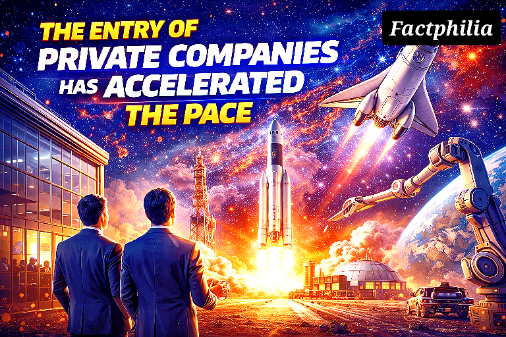
4. The entry of private companies has accelerated the pace.
Companies like SpaceX and Blue Origin have made space travel faster and more affordable. The number of private rocket launches in 2026 reached a record high.
The participation of private companies in the space sector has multiplied the pace of research and missions. While space programs were previously limited to government agencies, the private sector is now fostering competition with new technologies, faster launches, and lower costs. This has strengthened both innovation and global cooperation.
🔹Key Changes:
Faster rocket launches – Reusable rocket technology reduces time and cost.
Low-cost missions – Opportunities for small countries and startups.
The advent of space tourism – New options for space travel for ordinary citizens.
New technological breakthroughs – Increasing use of AI and automation.
Global competition – Rapid growth and investment in the space industry.
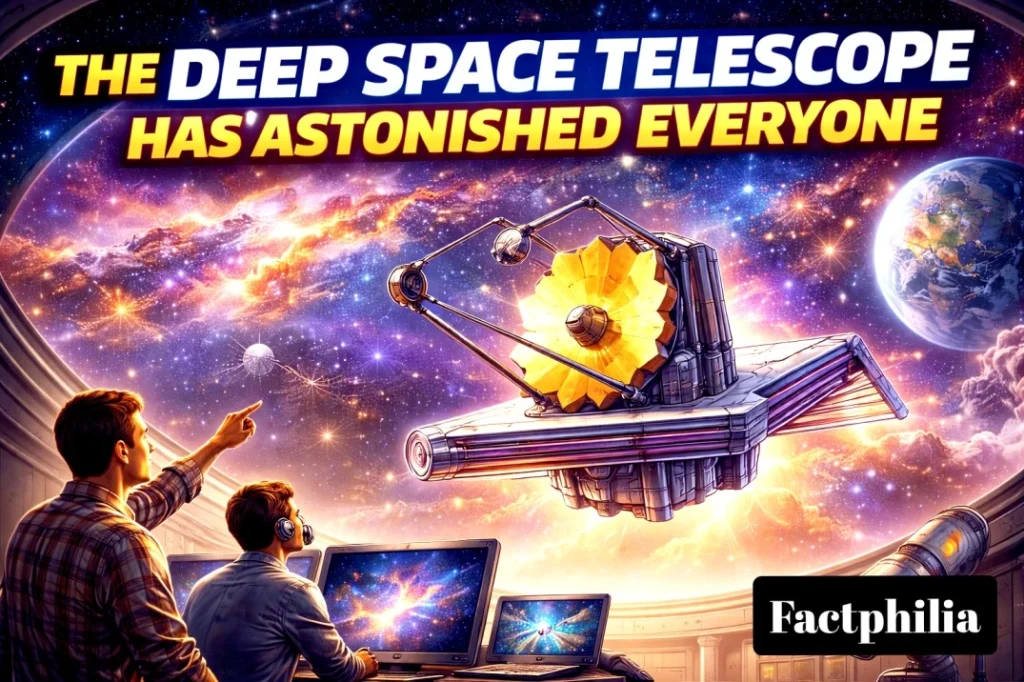
5. The Deep Space Telescope has astonished everyone.
The Deep Space Telescope has truly astonished scientists with its work. The James Webb Space Telescope has sent back stunning images of distant galaxies and the early universe. This is greatly helping scientists understand the origins of the universe.
The discoveries of the Deep Space Telescope have truly astonished scientists worldwide in space research. The James Webb Space Telescope has sent clear images of billions of years old galaxies in the universe, never before possible. Using infrared technology, this telescope can see through clouds of dust and gas, making it much easier to understand the process of star and planet birth.
Its discoveries have proven that the universe is much more vast and mysterious than we imagined, and it remains a very difficult task to fully understand.
Key achievements
Images of ancient galaxies – studied the earliest formations after the Big Bang, which are very remarkable.
Analysis of exoplanets – signs of water and gases in the atmospheres of distant planets.
The process of star birth – provided detailed glimpses of new stellar formations.
New information on the age of the universe – has helped us understand the mysteries of the early universe.
The Deep Space Telescope has ushered in a new revolution in space science.
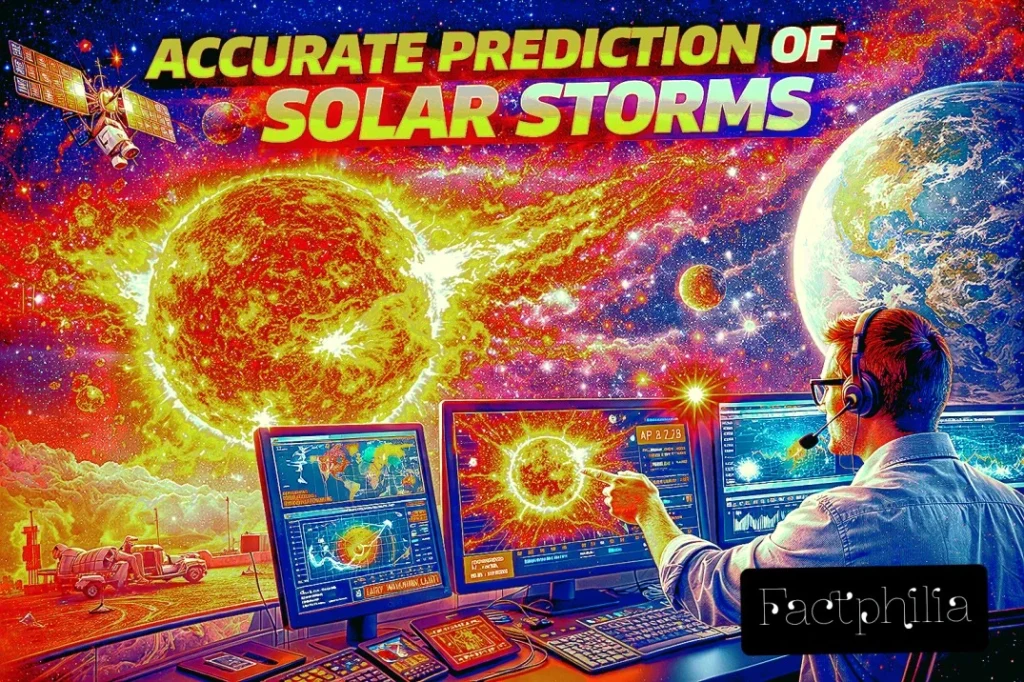
6. Accurate prediction of solar storms.
Solar observation missions in 2026 have made predictions of solar storms more accurate, protecting Earth’s satellites and communication systems.
Do you know what solar storms are? They are powerful bursts of energy and charged particles emanating from the Sun that impact Earth’s satellites, GPS, radio communications, and power grids. In recent years, space agencies have improved their predictions of these storms with greater accuracy using advanced solar observation techniques. Organizations like NASA and the Indian Space Research Organization (ISRO) are constantly monitoring the Sun’s activity, allowing early warning of potential danger.
Key advancements and benefits:
Real-time monitoring – Eruptions on the Sun’s surface are constantly monitored.
Satellite protection – Satellites can be put into safe mode with early warning.
Communication system protection – Helps reduce radio and GPS interference.
Power grid protection – Prepared to protect power networks from potential damage.
Astronaut protection – Reduces radiation exposure during space missions.
Accurate prediction of solar storms is proving to be a crucial step towards a secure future space and communications infrastructure.
7. Space tourism will now become a dream come true.
Space travel is no longer limited to astronauts; in 2026, space tourism tickets will become available to ordinary citizens.
🚀 Space Tourism is no longer a dream, it’s becoming a reality.
Space travel is no longer limited to trained astronauts. Instead, by 2026, space tourism has become a booming industry, where even ordinary citizens can reach the limits of space with specialized training and budget. Private companies like SpaceX and Blue Origin have given this sector new impetus.
Although it remains expensive, its cost is expected to decrease in the coming years as technology advances.
🌍 Key Points of Space Tourism:
1. Suborbital Flights – The opportunity to travel to the edge of space for a few minutes and view Earth.
2. Zero Gravity Experience – The unique experience of weightlessness.
3. Special Training – Passengers receive basic safety and health training before flight.
4. Planning for a Private Space Station – The possibility of an orbital hotel for tourists in the future.
5. The Rise of a New Economy – New investment and employment opportunities in the space industry.
Space Tourism is such a confluence of human curiosity and technological progress, which can change the definition of travel in the future.
8. Reusable Rockets Reduce Costs.
Reusable rocket technology has significantly reduced launch costs. This is allowing even smaller countries and private companies to launch space missions.
Reusable rockets have revolutionized the world of space exploration. Previously, most of the rocket’s components were lost after every launch, significantly increasing mission costs. However, technology has now been developed that allows the core of the rocket to safely return to Earth and be reused.
SpaceX has achieved significant success in this area, with rockets like the Falcon 9 having flown multiple times. Blue Origin is also continuously working on reusable technology.
🔹 Key advantages of reusable rockets:
Significant cost reduction – Reusing the same rocket multiple times will save millions of dollars.
Faster launch preparation – Reduces the need to build new rockets.
Environmental benefits – Reduced debris and saved resources.
Opportunities for small countries – Satellite launches have become possible at lower costs.
Competition in the space industry – The participation of more companies has accelerated innovation.
Reusable rockets have made space missions more affordable, faster, and accessible. This technology is also laying the groundwork for future missions to Mars and deep space.
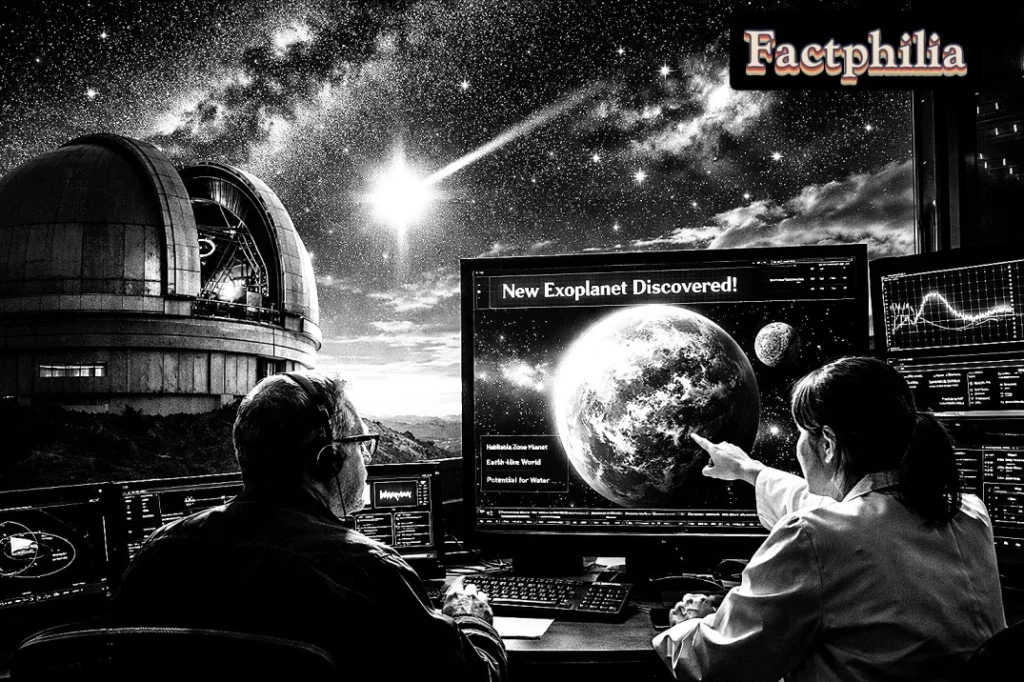
9. New breakthrough in exoplanet discovery.
With new technologies, scientists have identified several Earth-like planets that may harbor life.
The search for exoplanets, or planets outside our solar system, reached new heights in 2026. With the help of advanced telescopes and space missions, scientists are now able to identify planets that may be similar to Earth in terms of size, temperature, and atmosphere. The James Webb Space Telescope has provided very important clues by analyzing the atmospheres of distant planets.
🔭 New Achievements:
1. Identification of Earth-like planets – Planets in the habitable zone.
2. Detection of gases in the atmosphere – Signs of water vapor, methane, and carbon dioxide have been revealed.
3. Research on the possibility of life – Possible evidence of organic elements has also been provided.
4 Advanced imaging technology – Provides clearer and more accurate data than before.
5. Preparation for future missions – Plans are in full swing to further deepen the search for life.
Exoplanet research is proving to be a major step towards the discovery of life in the universe.
10. 🤖 Use of AI in Space
Artificial Intelligence is not only making waves on the internet, but it is now playing a vital role in data analysis, navigation, and robotic operations in space missions.
The use of Artificial Intelligence (AI) in space missions is rapidly increasing. The need for massive data, complex navigation, and automated decision-making has made AI a vital component of space technology. Institutions like NASA and the Indian Space Research Organization are developing AI-based systems to make missions safer and more accurate.
🚀 Key uses of AI:
Data analysis – faster processing of massive data from telescopes and rovers.
Automated navigation – self-routing of spacecraft.
Robotic operations – smart control of Mars rovers and drones.
Hazard detection – forecasting solar storms and technical malfunctions.
Fuel efficiency – better utilization of resources in mission planning.
AI is making space research more intelligent, safe, and future-oriented.
🔚 Conclusion
The Top 10 Space Exploration Facts in 2026 prove that humanity has entered a new era of space exploration. New technology, advanced telescopes, Mars missions, and AI-based systems have made space science faster and more effective than ever before.
When we carefully consider the Top 10 Space Exploration Facts in 2026, we realize that these are not just scientific achievements, but glimpses of future possibilities. Steps like preparations for a return to the Moon, exoplanet exploration, and space tourism are shaping the future.
Through all these facts, the Top 10 Space Exploration Facts in 2026 teach us that space is no longer distant, but is becoming increasingly accessible. If you are interested in space and science, the Top 10 Space Exploration Facts in 2026 are a great source of inspiration and knowledge, helping you understand the scientific revolution of the coming years.
What was the biggest achievement in space research in 2026?
Moon missions, new discoveries on Mars, and images from advanced space telescopes were the biggest achievements in 2026. These missions further clarified the origins of the universe and paved the way for future human missions.
Will humans return to the Moon in 2026?
Many space agencies have accelerated preparations for human missions to the Moon by 2026. New technology and international collaboration are bringing this goal closer to reality.
What new discoveries were made in Mars missions in 2026?
Signs of water on Mars, the identification of organic molecules, and the collection of soil samples are major achievements in 2026, which could prove crucial for future human missions.
Has space tourism become a reality in 2026?
Yes, in 2026, private companies have begun offering limited space tourism to ordinary citizens, making space travel no longer limited to scientists.
How will AI and new technology change space research in 2026?
AI-based systems have made data analysis, navigation, and risk identification more accurate, making space missions safer and more successful than ever before.
















Leave a Reply