
7 Powerful Reasons You Can’t Stop Checking Your Phone—and How to Break the Habit

Do you often check your phone without any particular reason? Maybe you pick it up just to check the time, but a few minutes later, you find yourself scrolling through social media, messages, or videos. Checking your phone can become such an automatic habit that you may unlock your screen even when there are no new notifications, simply to see what is happening.
This habit has become so common that we may not even notice it. While studying, working, eating, or getting ready for bed, checking our phones can become part of our daily routine.
But why do we keep checking our phones even when we know it can affect our time and attention?
The answer is not simply a lack of willpower. Smartphone habits can also be influenced by curiosity, emotions, attention, social needs, and environmental cues. The good news is that understanding these reasons can help us gradually develop healthier phone habits.
In this article, we will explore 7 psychological reasons why you can’t stop checking your phone and practical ways to manage this habit.
What Is the Habit of Constantly Checking Your Phone?
The habit of constantly checking your phone means repeatedly unlocking or looking at your mobile screen without a clear need. This may include checking notifications, opening social media, reading messages, or simply looking to see whether anything new has happened.
Using a phone is not a problem by itself. Smartphones help us stay connected, access information, learn, work, and enjoy entertainment. The problem may arise when checking the phone becomes an automatic behavior and we use it out of habit rather than intention.
For example, you may be concentrating on an important task when you notice your phone nearby and pick it up. A few minutes later, you realize that you have lost track of what you were doing. When this happens repeatedly, it can interrupt your focus and make tasks take longer to complete.
1. Instant Rewards Pull Us Toward Our Phones
One of the biggest attractions of checking our phones is the possibility of discovering something new. There may be a message, a new social media post, or an interesting video waiting for us.
We never know exactly what we will find each time we unlock our phones. Sometimes we receive an exciting message, while other times there is nothing important. This uncertainty can also encourage us to check our screens repeatedly.
In psychology, reward and learning processes are often linked to behavior. When an action occasionally leads to an enjoyable or interesting experience, we may become more likely to repeat it.
Example: You open social media and find a funny video or an interesting post. The next time you feel bored, your mind may automatically turn toward opening the app again.
How Can You Manage This Habit?
- Set specific times during the day to check social media.
- Before opening an app, ask yourself, “What am I looking for?”
- Keep your phone away from you while working on important tasks.
- Choose non-screen activities for entertainment, such as walking, listening to music, or reading.
2. Notifications Trigger Our Curiosity
The sound, vibration, or appearance of a notification can quickly capture our attention. We may want to know who sent a message or what new update has arrived.
This curiosity can become stronger when the full message is not visible on the screen. We may wonder, “Who sent that message?” or “Is something important happening?”
Even a small notification can interrupt our current activity. Once we unlock the phone to check it, we may end up opening other apps as well. Checking your phone can quickly turn into a longer distraction, pulling our attention away from what we were originally doing.
How Can You Manage This Habit?
- Turn off notifications from non-essential apps.
- Keep alerts enabled only for important people or tasks.
- Set specific times to check notifications.
- Use silent mode or Focus Mode while studying or working.
Not every notification requires an immediate response. Learning to distinguish important messages from attention-grabbing alerts can help protect your focus.
3. FOMO—The Fear of Missing Out
FOMO stands for Fear of Missing Out. It refers to the worry that we might miss something important, exciting, or meaningful.
People often share their achievements, trips, parties, experiences, and daily activities on social media. Seeing these updates repeatedly may make us feel that something important could be happening without us.
As a result, we may check our phones frequently to see what friends are posting, what is happening in group chats, or what is new in the world.
However, we do not need to know every update. Constantly trying to stay informed can sometimes distract us from our current activities and real-life experiences.
How Can You Manage This Habit?
- Limit how often you check social media.
- Mute or unfollow accounts that create unnecessary comparison or anxiety.
- Spend some parts of the day completely away from your phone.
- Remember that social media shows only a part of someone’s life.
You do not need to be everywhere or know every update. Sometimes, missing out on a few things can actually support your peace of mind.
4. Using Our Phones to Escape Boredom
When we are not busy, our phones often become the easiest option. We can unlock the screen and find videos, posts, or messages within seconds.
When we feel bored, our phones provide instant entertainment. Gradually, we may start using them during every small break—while waiting for someone, traveling, or sitting idle between tasks.
This can create a habit of picking up the phone without thinking. We may even forget that resting, observing our surroundings, or simply spending time with our thoughts is normal too.
How Can You Manage This Habit?
- Choose a few non-digital activities for short breaks.
- Pay attention to your surroundings instead of reaching for your phone while waiting.
- Spend a few minutes resting without a screen each day.
- Keep a book, notebook, or small activity nearby that does not require your phone.
Boredom is not always a problem. Sometimes, it gives us space to think, relax, or develop new ideas.
5. Temporary Relief from Stress and Uncomfortable Emotions
Sometimes, we check our phones because we want to escape stress, anxiety, loneliness, or a difficult task.
When a task feels challenging or our minds feel unsettled, watching videos or scrolling through social media can temporarily distract us. This may provide short-term relief.
However, if we turn to our phones every time we experience an uncomfortable emotion, we may avoid dealing with the actual problem. For example, when feeling stressed about an important report, we may repeatedly check messages while the report remains unfinished.
How Can You Manage This Habit?
- Before picking up your phone, identify what you are feeling.
- Take a few deep breaths and pause for a moment.
- Write down the source of your stress or talk to someone you trust.
- Break difficult tasks into smaller, manageable steps.
- Try other ways to relax, such as walking or gentle stretching.
Taking a short break with your phone is not necessarily wrong. What matters is recognizing whether you are using it for entertainment or to avoid an uncomfortable feeling.
6. Phone Checking Becomes an Automatic Habit
Many everyday activities gradually become habits. After encountering a particular cue, we may repeat a behavior without thinking much about it.
The same can happen with checking our phones. For example:
- Checking the phone immediately after waking up.
- Opening social media before starting work.
- Picking up the phone as soon as the screen lights up.
- Checking messages whenever a task becomes difficult.
- Watching videos as soon as we lie down in bed.
Over time, checking the phone can become so automatic that we may not even know why we picked it up.
How Can You Manage This Habit?
- Change where you usually keep your phone.
- Complete part of your morning routine before checking it.
- Keep your phone in another room when starting an important task.
- Replace common phone-checking moments with another small behavior.
- Pause for a few seconds before picking up your phone and identify your purpose.
Changing a habit does not always mean forcing yourself to resist it. Modifying your environment can also make a difference.
7. The Need for Social Connection
Smartphones help us stay connected with family, friends, coworkers, and online communities. Reading or responding to a message can give us a sense of social connection.
For many people, checking their phones is not just about entertainment. It is also a way to make sure their loved ones are okay. Group chats, messages, and social media can become part of everyday communication.
However, when we feel that every message needs an immediate response or that we must always be available, our phone-checking habit may increase.
How Can You Manage This Habit?
- Set specific times to respond to messages from friends and family.
- Use separate notification settings for important contacts.
- Focus on the person in front of you during conversations.
- Let people close to you know when you will be away from your phone for work or rest.
Social connection is important, but healthy relationships do not require us to be online all the time.
7 Practical Ways to Break the Phone-Checking Habit
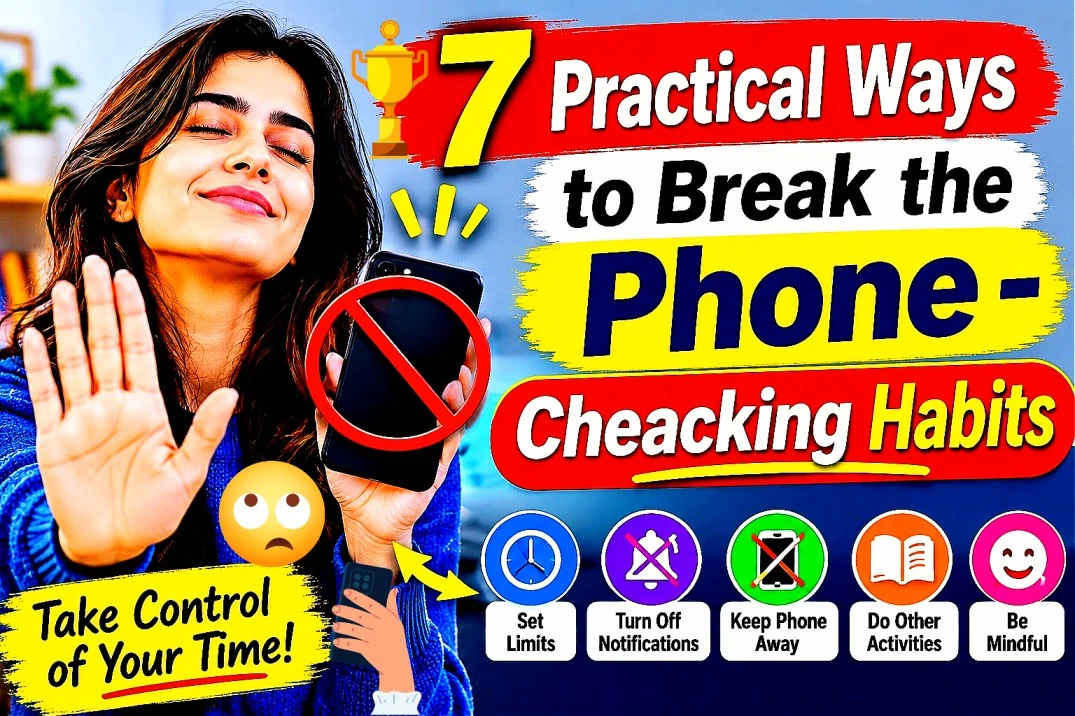
Understanding the reasons behind this behavior is the first step. The next step is to adopt small strategies that are easy to apply in everyday life.
1. Set a Clear Purpose Before Using Your Phone
Before unlocking your phone, ask yourself, “What am I using it for?” If you do not have a clear purpose, put it back.
2. Turn Off Unnecessary Notifications
Not every app needs to capture your attention. Keep alerts for essential notifications and turn off the rest.
3. Keep Your Phone Out of Sight
While studying, working, or talking to someone, keeping your phone in a bag or another room may be more helpful than simply placing it face down on the desk.
4. Set Specific Times for Social Media
Choose a few specific times during the day to check social media. This can reduce the urge to open apps repeatedly.
5. Monitor Your Screen Time
Check your phone’s screen-time report. Identify which apps take up most of your time and consider whether their use matches your needs.
6. Practice Spending Short Periods Without Your Phone
Start by spending 10–15 minutes away from your phone. Gradually increase the time. The goal is not to abandon your phone completely, but to use it more intentionally.
7. Do Not Expect Perfect Change Overnight
If you find yourself checking your phone repeatedly, avoid blaming yourself. Instead, observe the habit. Notice what triggered it and decide what small change you can make next time.
Changing habits takes time. Small, consistent efforts are often more practical than trying to make a major change all at once.
When Can Phone Checking Become a Concern?
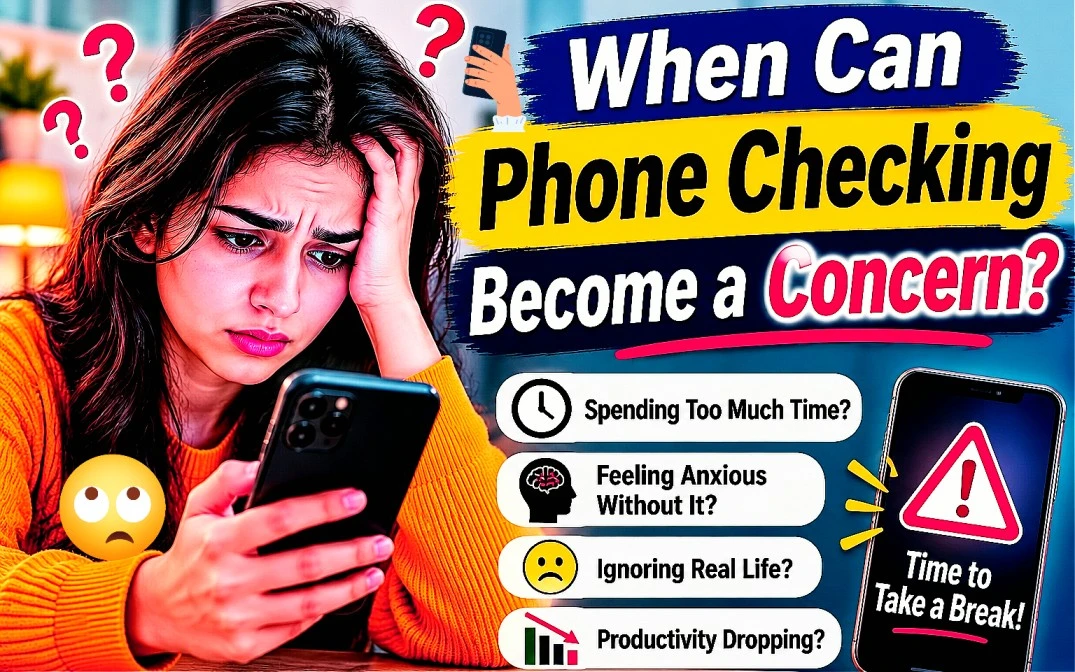
Frequent phone use does not affect everyone in the same way. It depends on how much it interferes with your studies, work, sleep, relationships, and daily responsibilities.
If checking your phone repeatedly causes you to delay important tasks, lose sleep, struggle to focus during conversations, or feel very uncomfortable when your phone is unavailable, it may be useful to take a closer look at your habits.
If phone use is consistently affecting your daily life and you find it difficult to manage, speaking with a qualified mental health professional may be helpful.
Conclusion
The habit of constantly checking your phone is not simply a matter of lacking willpower. Instant entertainment, notifications, FOMO, boredom, stress, automatic habits, and the need for social connection can all draw us toward our screens.
Changing this habit does not mean giving up your phone completely. Instead, it is important to understand when, why, and for what purpose you use it.
Turning off unnecessary notifications, keeping your phone away during focused work, setting limits on social media, and practicing screen-free moments are small but useful steps.
Remember: The goal is not to run away from your phone, but to regain control of your time and attention. When you learn to use your phone intentionally rather than automatically, you can make more room for your work, relationships, and real-life experiences.
Curious to learn more? Explore our latest psychology articles, fascinating facts, and insights that help you understand the world around you.
Explore All ArticlesFrequently Asked Questions
1. Why do I keep checking my phone even when there are no notifications?
Constantly checking your phone can become an automatic habit driven by curiosity, boredom, stress, or the expectation of finding something interesting. Over time, your brain may prompt you to check your phone even when no notification has arrived.
2. How can I stop checking my phone so often?
To reduce frequent phone checking, turn off unnecessary notifications, keep your phone out of sight while working, set specific times for checking social media, and use screen-time limits. Start with small changes and build consistency.
3. Why is checking my phone so addictive?
Phone checking can feel difficult to control because apps provide unpredictable rewards, such as messages, likes, videos, and updates. This reward pattern can encourage repeated checking and make the habit harder to break.
4. What is the psychology behind constantly checking your phone?
The habit may be influenced by instant rewards, fear of missing out (FOMO), social connection, boredom, stress relief, and environmental cues. These factors can make checking your phone feel automatic.
5. Does checking your phone too often affect concentration?
Frequent phone checking can interrupt attention, make it harder to stay focused on tasks, and increase the time needed to return to what you were doing. Reducing interruptions can help support better concentration.
6. How do I stop checking my phone while studying or working?
Keep your phone in another room or out of reach, silence non-essential notifications, and check messages during planned breaks. Working in focused time blocks can also help reduce distractions.
7. What is FOMO, and how does it make us check our phones?
FOMO stands for “fear of missing out.” It is the worry that other people are experiencing something important or interesting without you. This feeling can encourage frequent checking of social media, messages, and updates.
8. How can I reduce my phone screen time?
Track your daily screen time, set app limits, remove distracting apps from your home screen, create phone-free periods, and replace scrolling with activities such as reading, walking, or talking with others.
9. Is constantly checking your phone a bad habit?
Frequent checking may become a problem when it regularly interrupts daily activities, sleep, relationships, studying, or work. The impact matters more than the number of times you check your phone.
10. How long does it take to break the phone-checking habit?
The time varies from person to person and depends on how often the habit occurs and how consistently new routines are practiced. Gradual changes, clear boundaries, and regular practice can help make phone use more intentional.



Leave a Reply