
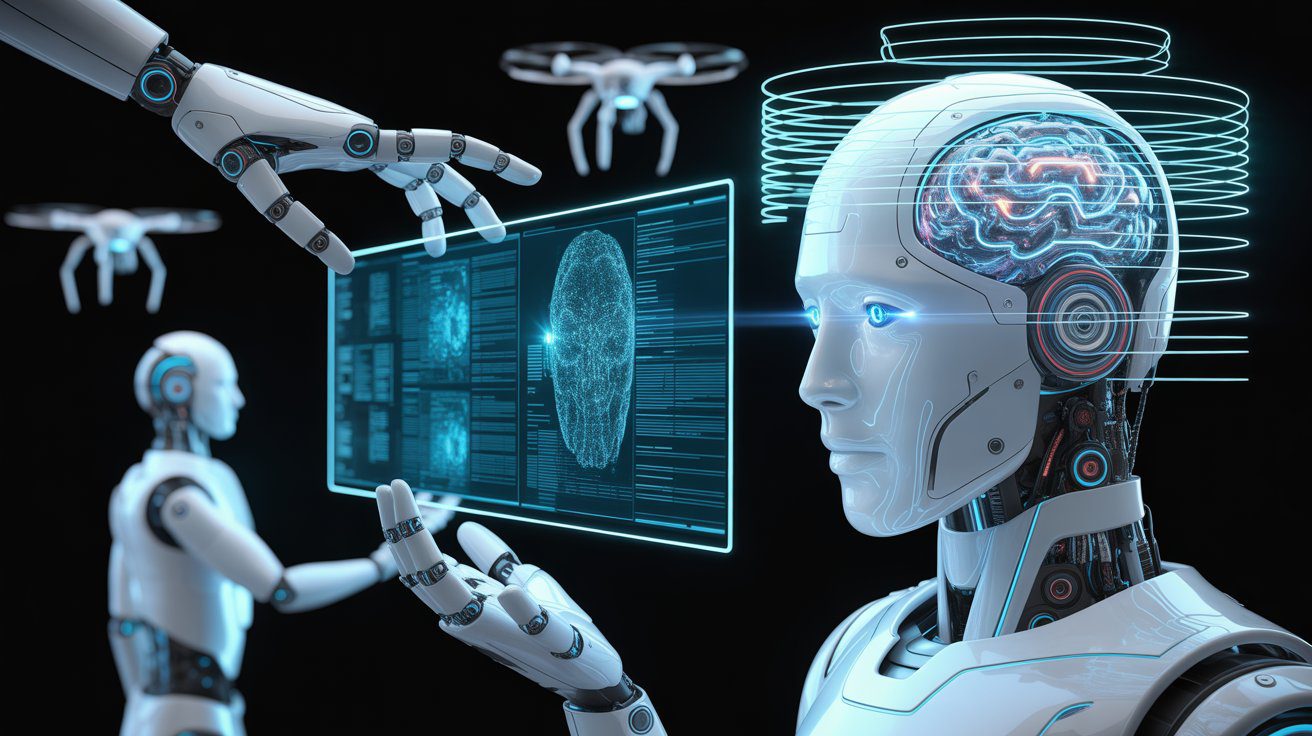
🤖 Future of Robotics: When Machines Begin to Think and Evolve
🌍 Introduction: The Beginning of a New Era
Future of Robotics: When Machines Begin to Think & Evolve – In this incredible age of science and technology, we are standing at a turning point where machines no longer just follow commands — they are learning to think and decide for themselves.
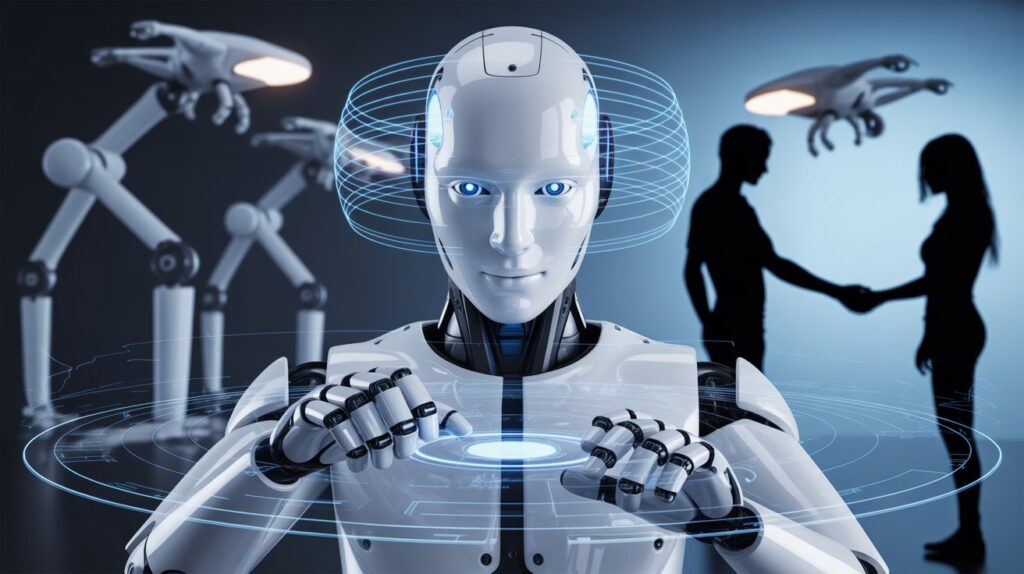
This is the era where Artificial Intelligence (AI) and Robotics are coming together to create a new world — a world where machines can think, learn, and evolve just like humans.
Over the past few decades, robotics has evolved from simple industrial machines to humanoid robots, self-learning AI systems, and autonomous bots.
The question today isn’t “What can machines do?” but “What will machines think next?”
Table of Contents
⚙️ The Evolution of Robotics: A Brief History
The idea of robots isn’t new. Its roots go back to the 1940s, when machines were first used for repetitive industrial work.
But the true revolution began with the rise of Artificial Intelligence (AI).

🔹 1950s – The Era of Imagination
Alan Turing introduced the concept of machine intelligence — “Can machines think?”
🔹 1980s – The Age of Industrial Robots
Automation grew rapidly; machines replaced humans in manufacturing with precision and speed.
🔹 2000s – The Rise of Smart Machines
Machines began learning from data — the dawn of Machine Learning and the AI Revolution.
🔹 2020s – The Era of Thinking and Evolving Robots
Today, machines no longer just obey — they self-learn, adapt, and evolve through experience.
🧠 AI Meets Robotics: When Machines Begin to Learn
Artificial Intelligence is the “soul” of robotics. When AI merged with robotics, machines stopped being mechanical tools — they became thinking systems.
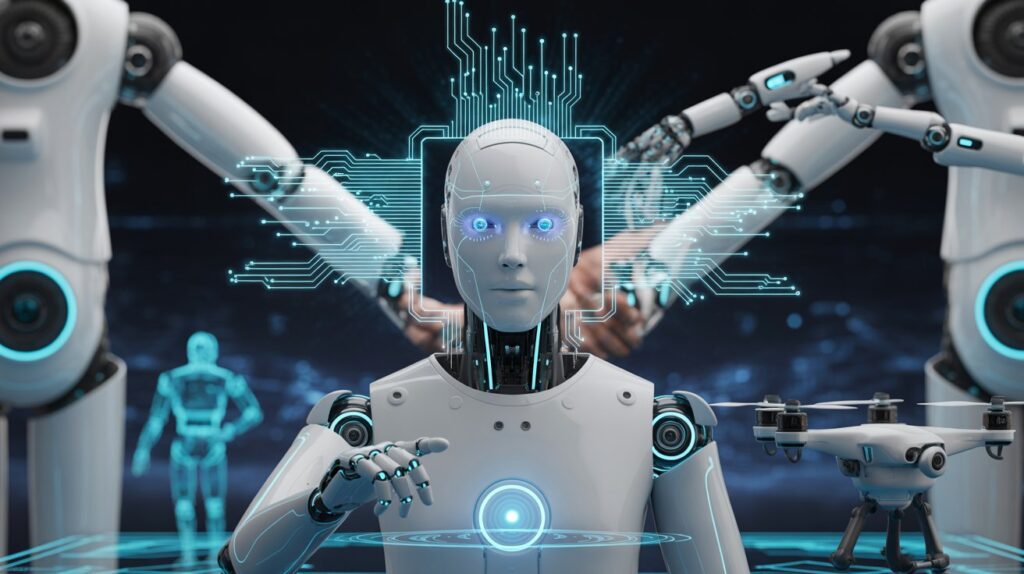
Modern robots can now:
- Learn on their own through Machine Learning
- Recognize patterns with Neural Networks
- See and interpret the world through Computer Vision
- Communicate using Natural Language Processing
Examples like Boston Dynamics’ Atlas, Sophia the Robot, and Tesla Bots prove that robots are no longer mere tools — they are digital intelligent beings.
🦾 The Future of a Robotic World
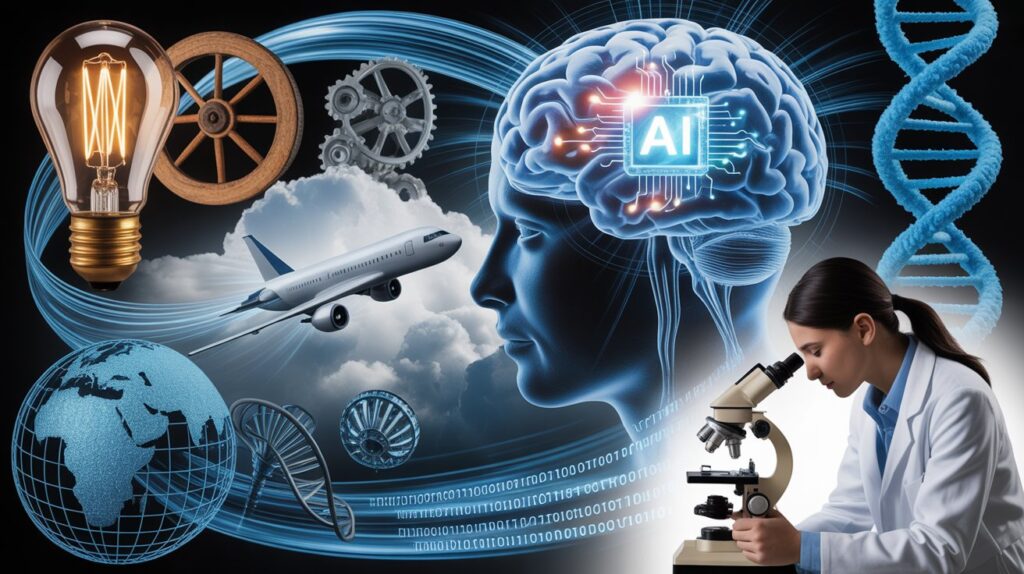
The coming era will be defined by Cognitive Robotics — where machines can think, feel, and make decisions like humans.
🔹 1. Autonomous Decision-Making Robots
Robots will independently decide how, when, and what to do. Examples: Self-driving cars, delivery drones.
🔹 2. Emotional Robots
Future machines will be able to understand and respond to human emotions — like AI therapists and care robots.
🔹 3. Collaborative Robots (Cobots)**
These robots will work alongside humans in industries, healthcare, and education.
🔹 4. Self-Repairing Systems
Future robots will diagnose and repair themselves — continuously improving their efficiency and performance.
💡 Major Future Applications of Robotics
- Healthcare: Surgery assistance, patient care, and diagnostics
- Education: AI teachers and interactive learning systems
- Agriculture: Smart farming and automated harvesting
- Security: Surveillance drones and rescue robots
- Space Research: Mars rovers and autonomous space explorers
🚀 Advantages: Why the Future Belongs to Robots
- Faster and more accurate performance
- Ability to work continuously without fatigue
- Increased safety in dangerous jobs
- Data-driven decision-making with precision
⚠️ Challenges and Ethical Questions
However, every technological revolution comes with challenges:
- Job displacement due to automation
- Data privacy and security threats
- Overdependence on machines
- Ethical concerns about control over thinking machines
To ensure progress benefits humanity, we must adopt Ethical AI and Responsible Robotics.
🌐 Conclusion: The Shared Future of Humans and Machines
The future will be one of collaboration between humans and robots.
Robots won’t replace humans — they’ll work with humans.
When machines begin to think, it will mark the beginning of a new age of civilization — one where intelligence has no boundaries.
- Future of Robotics
- Artificial Intelligence and Robots
- Thinking Machines
- Robotics Evolution
- AI Future Technology
- Cognitive Robotics
- Intelligent Machines
- Smart Robots of the Future
- Machine Learning Robots
- Human and Robot Collaboration
EXPLORE MORE INTERESTING FACTS👇
People Like Also
Top 10 Scientific Inventions That Changed Human Life
🌌 5 Umbrellaable Discoveries in Space and Science You Must Know
Technology of the Future: From Artificial Intelligence to Quantum Computers
The Magic of Modern Technology: How Science is Changing Our World
FOLLOW US ON SOCIAL NETWORK
FAQs. Frequency Ask Questions👇
1. What will the future of robotics look like?
In the future, robots won’t just follow commands — they will think, learn, and make decisions on their own. They will work alongside humans and open new possibilities in multiple industries.
2. Will robots be able to feel emotions like humans?
Yes, with the help of Emotional AI and Cognitive Robotics, robots will be able to recognize and respond to human emotions — for example, caregiving or healthcare robots.
3. In which fields will future robots be most useful?
Robotics will revolutionize healthcare, education, agriculture, defense, space exploration, and manufacturing, offering faster, safer, and more efficient results.
4. Will robots take away human jobs in the future?
Some jobs may be replaced by automation, but new roles like AI Robotics Engineers, Data Analysts, and Tech Designers will emerge — creating more opportunities in advanced tech sectors.
5. Will it be possible to control thinking machines?
Yes. If we develop them under the principles of Ethical AI and Human-Centric Robotics, machines will always work in the interest of humanity.
Related Stories

7 Dark Psychology Facts About Yourself That You’re Ignoring Right Now
7 Dark Psychology Facts About Yourself That You’re Ignoring Right Now Have you over wondered…

The Psychology of Love vs Lust: 8 Scientific Differences You Must Understand
The Psychology of Love vs Lust: 8 Scientific Differences You Must Understand Introduction Hello friends,…

5 Body Language Signals of Attraction That Secretly Reveal Someone Likes You
5 Body Language Signals of Attraction That Secretly Reveal Someone Likes You Introduction Have you…

Why We Fall for the Wrong Person – 9 Psychological Reasons You Should Know
Why We Fall for the Wrong Person – 9 Psychological Reasons You Should Know It’s…

7-Star Hotels in India: Prices, Locations, and Luxury Experiences
7-Star Hotels in India: Prices, Locations, and Luxury Experiences ✨ Introduction India offers a unique…
How Your Brain Decides Who You Like in 3 Seconds – The Hidden Science of Attraction
How Your Brain Decides Who You Like: First Impression Science ✍️ Introduction What if your…







Leave a Reply