
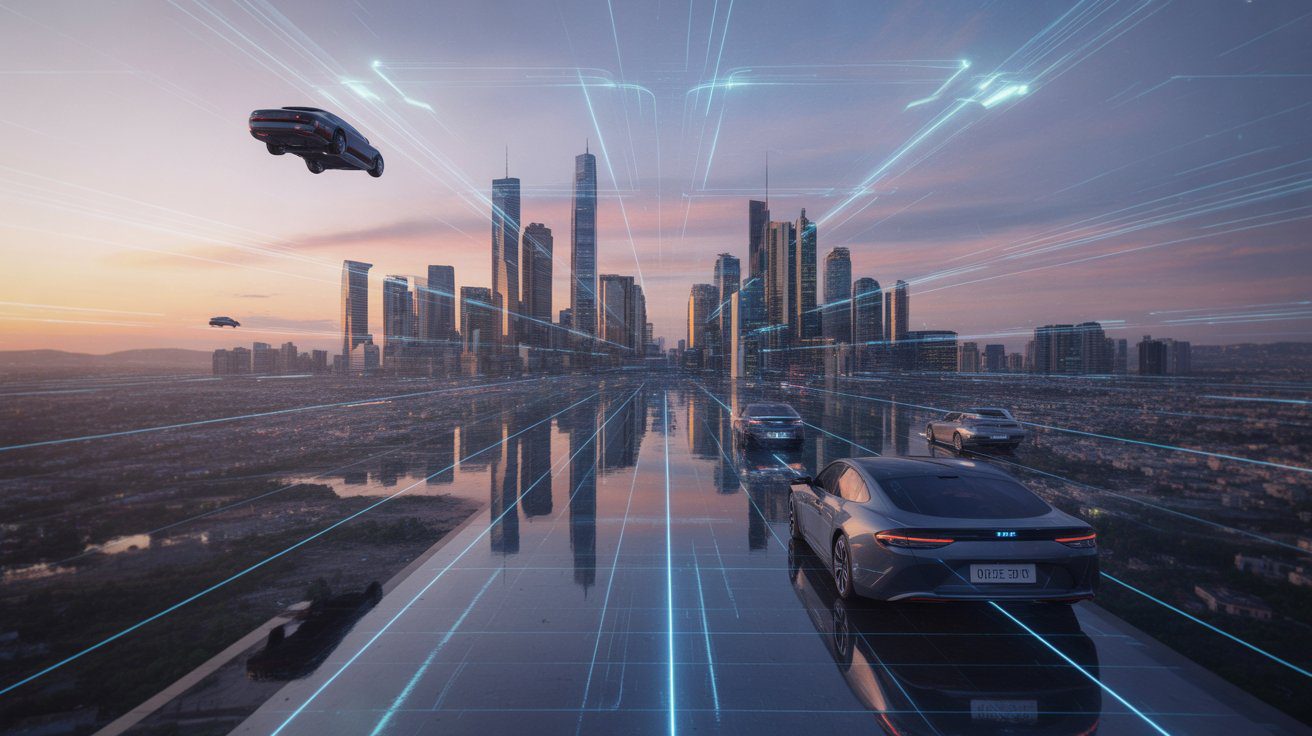
Future Technology: The Wonders of Artificial Intelligence and Flying Cars
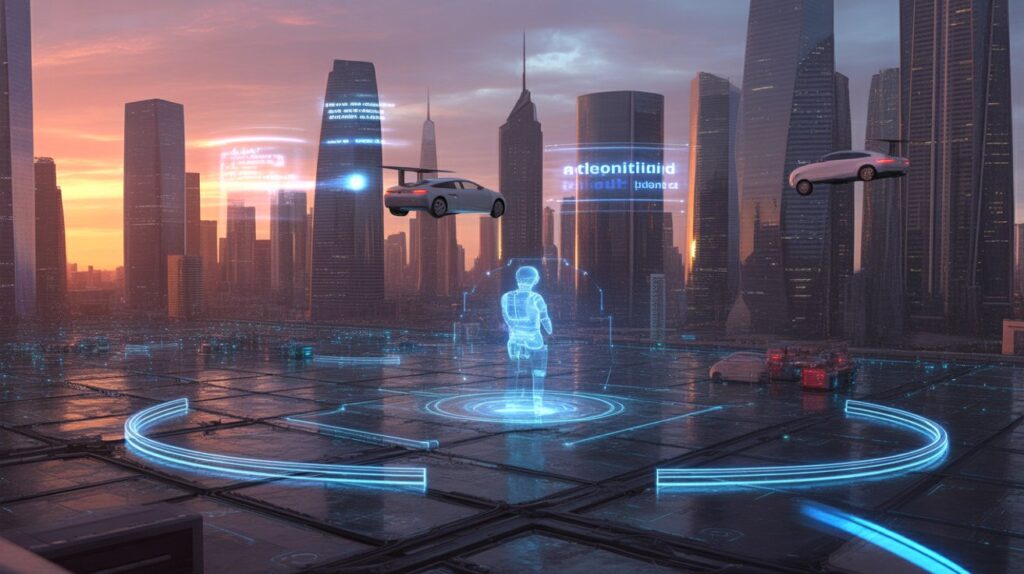
Introduction
Future Technology: The Wonders of Artificial Intelligence and Flying Cars – We are living in an era where things that once existed only in imagination are now becoming reality. From Artificial Intelligence (AI) to Flying Cars, technologies once confined to sci-fi movies are now entering our real world of science and transportation.
In this post, we’ll explore in depth how AI and flying cars together are transforming the way we travel, live, design cities, and shape societies. We’ll also discuss the opportunities, challenges, and the preparations humanity needs for this future.
Take a glimpse into the exciting world of future technology! Artificial Intelligence and flying cars are set to transform our lives. Discover how these amazing innovations are making the world smarter, safer, and faster. 🚀
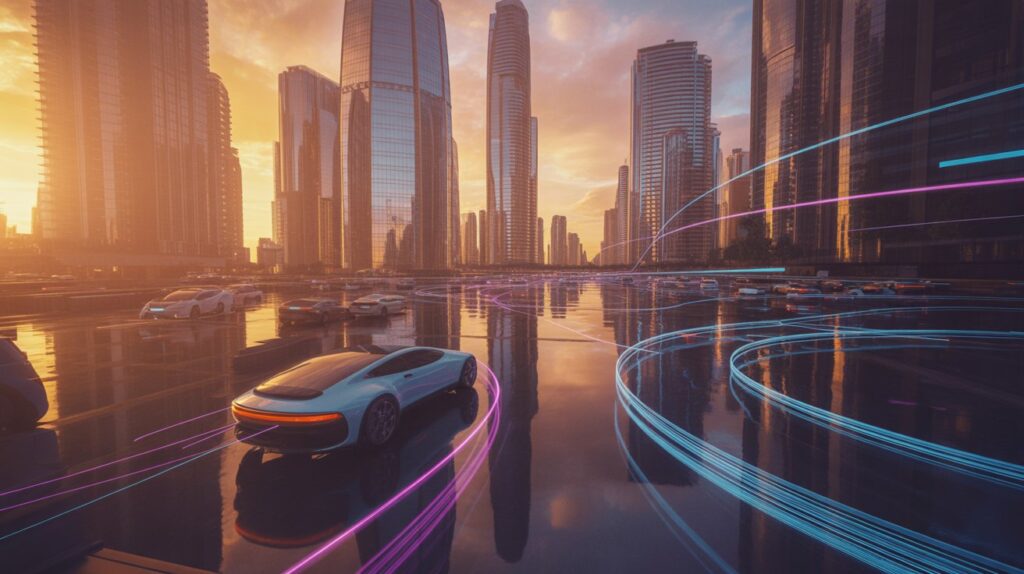
Table of Contents
1. Artificial Intelligence (AI): An Overview
AI, or Artificial Intelligence, is the scientific process of teaching machines to “think,” “understand,” “learn,” and “decide.” Today, AI systems are embedded in daily life — smartphones, watches, cars, healthcare, and industrial automation.
1 Core Technologies of AI
- Machine Learning – Learning from data and identifying patterns.
- Deep Learning – Neural-network models capable of complex reasoning.
- Sensor Fusion – Combining data from multiple sources (camera, radar, LiDAR, GPS).
- Autonomy – Systems capable of self-decision without human control.
2 Importance of AI
AI reduces human error, enables faster decision-making, and allows data-based prediction. For example, an AI-driven car can detect potential danger and apply brakes before a human reacts. The same principle will power future air-borne vehicles.
3 AI Meets Flying Cars
In flying cars, AI plays the central role — from route planning and air-traffic management to autonomous piloting and predictive maintenance. Research on eVTOL (electric Vertical Take-Off and Landing) technology confirms AI’s growing importance in aviation safety and autonomy.
2. Flying Cars: The Science and the Reality
Hearing “flying cars” reminds us of science-fiction movies — yet it is no longer a dream but an emerging reality.
1 What Is a Flying Car?
Flying cars are vehicles that can drive on roads and also take off into the sky. They rely on eVTOL technology — electric vertical take-off and landing systems powered by lightweight materials and advanced batteries.
2 Notable Prototypes and Companies
- AirCar: A certified two-seater car-plane hybrid by Klein Vision with retractable wings.
- Numerous companies in Japan, the U.S., and Europe are testing eVTOL models and urban-air-mobility services.
3 Why It’s Becoming Possible Now
- Advances in battery technology (lithium-ion, solid-state).
- Integration of sensors and AI systems for stable flight.
- Lightweight, durable materials (carbon fiber, aluminum alloys).
- Rising need to reduce traffic congestion and air pollution.
4 Current Challenges
- Safety & Certification: Airworthiness approvals are complex and time-consuming.
- Infrastructure: Requires vertiports, landing pads, and charging stations.
- Regulations: Clear airspace laws and control systems are still evolving.
- Cost & Acceptance: High production costs and limited public trust.
3. AI + Flying Cars: Working Together
The combination of AI and flying cars makes future travel truly revolutionary.
1 Route Planning & Traffic Management
AI will help manage skies crowded with thousands of eVTOLs:
- Real-time navigation using weather, wind, and air-traffic data.
- Avoiding air congestion through AI-based coordination.
- Fully autonomous flight without human pilots.
2 Safety & Maintenance
AI ensures flight safety through:
- Predictive maintenance that detects faults before failure.
- Emergency protocols for bad weather or technical issues.
- Real-time analysis of sensor data for quick decisions.
3 User Experience & Control
- Voice and gesture-based controls: “Take me home,” and the system plans the route.
- Personalized travel comfort and in-flight entertainment via AI.
- Learning user preferences to optimize flight experience.
4 Example Scenario
Imagine booking a flying taxi that picks you up from your building, lifts off vertically, and drops you at your destination in five minutes — all managed by AI from take-off to landing.
4. The Future Ahead: Next 5–10 Years
1 Urban Transport Revolution
- Cities will experience reduced traffic congestion.
- Vertiports will become part of urban infrastructure.
- Flying-taxi services may become common; for instance, China plans thousands of such vehicles soon.
2 New Business Models
- Air-taxi services and hybrid transport networks (land + air).
- Growth of autonomous eVTOL manufacturing and maintenance.
3 Technology & Environment
- Electric flying cars produce less pollution than fuel-based vehicles.
- AI optimizes energy consumption and battery performance.
4 Challenges
- Air-space governance, night-flight rules, and noise control must be established.
- Public trust and affordability will take time.
- Certification and pilot training requirements are rigorous.
5. India’s Perspective: Opportunities & Barriers
1 Opportunities
- Major Indian cities like Mumbai, Delhi, Bengaluru suffer massive traffic — flying cars can help.
- Government initiatives for Smart Cities favor future mobility solutions.
- AI-based air-traffic management can be developed locally.
2 Barriers
- Lack of regulatory framework for airspace below 500 meters.
- High costs of vehicles and infrastructure.
- Public safety concerns and limited pilot-training resources.
- Noise and environmental restrictions.
3 Possible Starting Points
- Pilot projects in smaller cities.
- Medical and logistics use-cases (emergency deliveries).
- Government-supported Smart-City trials for eVTOL services.
6. Conclusion
From Artificial Intelligence to Flying Cars, humanity is entering a phase where imagination merges with reality. These technologies are not only redefining transportation but also shaping future societies, city designs, and environmental sustainability.
If we act now — by developing AI systems, safe regulations, infrastructure, and public awareness — we may soon see skies filled with vehicles gliding over rooftops as part of our everyday commute.
The age of “future science” has begun — and soon, traffic jams may truly become history.
EXPLORE MORE INTERESTING FACTS 👇
Related Posts (People like Also)
10 Amazing Science Facts That Will Truly Surprise You
How Technology Will Transform the World by 2050
Top 10 Scientific Breakthroughs That Are Changing Our Future
Science and Innovation 2026: How New Ideas Are Creating a Better World
FOLLOW US ON SOCIAL MEDIA👇
FAQ. Frequency Ask Questions👇
1. What is Artificial Intelligence (AI), and how does it work in future technology?
Artificial Intelligence is a technology that enables machines to think, learn, and make decisions like humans. It is the foundation of future innovations such as flying cars, smart cities, and robotic systems.
2. What are Flying Cars, and how do they work?
Flying cars are hybrid vehicles capable of both driving on roads and flying in the air. They use electric motors, vertical take-off (eVTOL) systems, and AI-powered navigation to ensure safe and automatic flight.
3. How are Artificial Intelligence and Flying Cars connected?
AI acts as the “brain” of flying cars. It helps the vehicle make real-time decisions based on traffic, weather, and route information. AI systems continuously learn from data to make flights safer, faster, and more efficient.
4. Will flying cars be available to the public in the next 10 years?
Yes, several companies like Klein Vision, Joby Aviation, and SkyDrive plan to launch commercial flying cars by 2030. Initially, they will be expensive, but as technology advances, the cost will gradually decrease.
5. What is the future of flying cars in India?
The future looks promising. With heavy traffic and pollution in cities like Mumbai, Delhi, and Bengaluru, AI-based flying taxi services could become very useful. The Indian government is exploring such technologies under the Smart City Mission.
6. Are flying cars environmentally safe?
Yes, flying cars are powered by electric engines, which significantly reduce carbon emissions. AI systems optimize energy consumption, making these vehicles eco-friendly and sustainable.
7. What challenges do AI and Flying Cars face today?
Major challenges include safety certification, air traffic regulations, infrastructure, cost, and public acceptance. However, AI systems are evolving rapidly to solve these issues and make this technology widely accessible.
8. Can AI replace humans?
No, AI is designed to assist humans, not replace them entirely. While it simplifies decision-making, emotional intelligence, creativity, and ethics remain uniquely human traits.
9. How will AI and flying cars change our lives in the future?
In the coming years, AI and flying cars will make travel faster, safer, and pollution-free. Commuting to work or school will take just a few minutes, and urban planning will extend into the skies.
10. Will only rich people be able to afford flying cars?
Initially, yes. But as technology becomes more affordable, flying cars will eventually be accessible to the general public — just like how electric cars have become more affordable today.
Artificial Intelligence, Flying Cars, Future Technology, AI in Hindi, eVTOL Vehicles, Smart Cities, Future of AI, AI and Flying Cars, AI Innovations, Future Transport
Related SStories



10 Ancient Indian Inventions That Changed the World
Surprising 10 Ancient Indian Inventions That Changed the World India is renowned not only for…

10 Psychological Facts About Human Behavior and Attraction
10 Psychological Facts About Human Behavior and Attraction Human behavior and attraction have always been…

Unbelievable: Top 10 Space Exploration Facts in 2026 That Will Shock You
Top 10 Space Exploration Facts in 2026 That Will Shock You Did you know that…

7 Amazing Psychology Secrets Behind Human Behavior: Proven to Change the Way You Think
🧠 Psychology Secrets Behind Human Behavior: That Will Change the Way You Think Have you…

How does the human brain work? 5 Psychology facts that will change your thinking
Have you ever wondered what’s happening inside the brain when we think? How does the…

Why Do Humans Think This Way? Science Reveals the Hidden Truth
Why Do Humans Think This Way? Science Reveals the Hidden Truth Have you ever wondered…

10 Ancient Indian Inventions That Changed the World
Surprising 10 Ancient Indian Inventions That Changed the WorldIndia is renowned not only for its culture, yoga, and spirituality, but…

10 Psychological Facts About Human Behavior and Attraction
10 Psychological Facts About Human Behavior and AttractionHuman behavior and attraction have always been a subject of mystery. We often…

Unbelievable: Top 10 Space Exploration Facts in 2026 That Will
Top 10 Space Exploration Facts in 2026 That Will Shock YouDid you know that 2026 has become a historic year…

7 Amazing Psychology Secrets Behind Human Behavior: Proven to Change
🧠 Psychology Secrets Behind Human Behavior: That Will Change the Way You ThinkHave you ever wondered why people sometimes make…

How does the human brain work? 5 Psychology facts that
Have you ever wondered what’s happening inside the brain when we think?How does the human brain work? This question crosses…

Why Do Humans Think This Way? Science Reveals the Hidden
Why Do Humans Think This Way? Science Reveals the Hidden TruthHave you ever wondered why two people think completely differently…





Leave a Reply