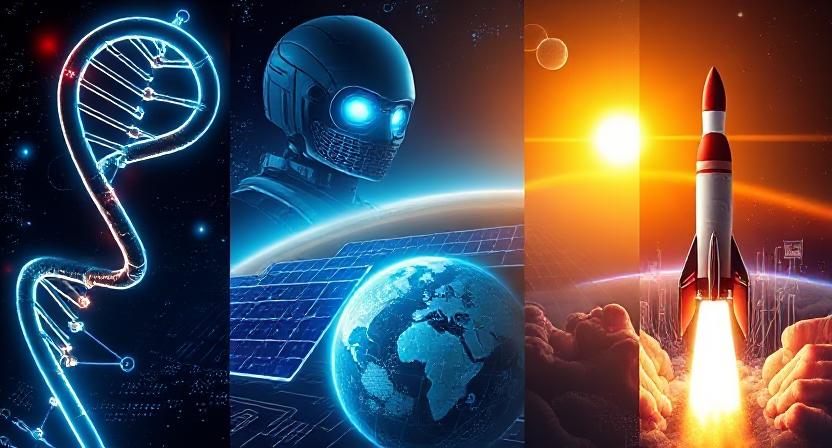
The Scientific Discoveries That Are Redefining Our Tomorrow

🔹 Introduction:
Top 10 Scientific Breakthroughs That Are Changing Our Future – The world of science and technology is evolving faster than ever before. Every year, new innovations emerge that push the boundaries of human imagination.
Table of Contents
🧬 1: Gene Editing – The DNA Revolution of the Future
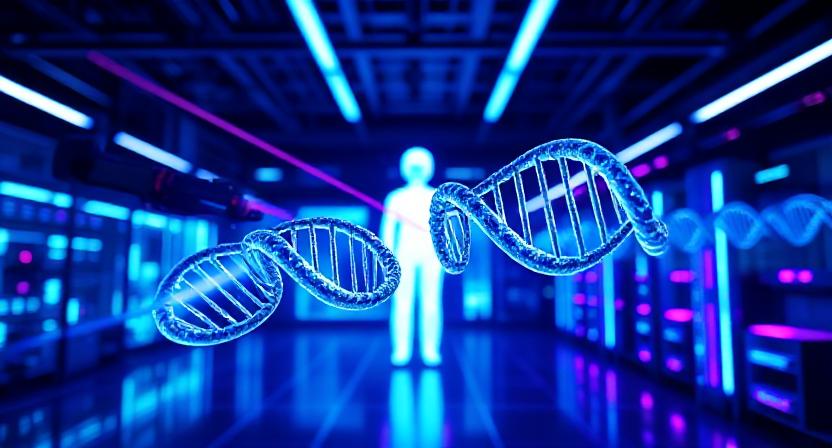
CRISPR Technology has completely changed the face of medical science.
👉 Scientists can now edit human DNA, meaning diseases can potentially be eliminated at their source.
🌿 What’s Changing:
- Genetic disorders like Thalassemia, Cancer, and Sickle Cell Anemia can be treated permanently.
- The concept of “Designer Babies” might soon become a reality.
In today’s world, Artificial Intelligence (AI) is not just a technology — it has become an extension of human thought, understanding, and decision-making. Earlier, computers only followed human commands, but now machines have learned to make decisions, learn from data, and adapt to situations on their own.
smartphone face recognition and Google Assistant to chatbots, self-driving cars, and medical diagnosis — these are all living examples of AI intelligence.
AI is generally divided into three main categories:
Narrow AI – Specialized in a single task, like Siri or Alexa.
General AI – Has the potential to think and reason like humans.
Super AI – Could one day surpass human intelligence and capabilities.
The impact of AI extends far beyond the tech world. It’s revolutionizing healthcare, education, business, finance, and even art and music.
In the future, AI will make our lives even more smart, fast, and predictive. But it also raises an important question — will machines one day become more intelligent than humans?
🤖 2: Artificial Intelligence – When Machines Started to Think

AI is no longer just a tool — it has evolved to learn, reason, and make decisions like humans.
Today, AI is transforming healthcare, education, business, and even art.
🌟 Key Uses of AI:
- Chatbots and Virtual Assistants like ChatGPT are redefining communication.
- Self-driving Cars are reducing traffic and road accidents.
- AI in Healthcare enables early disease detection and personalized treatment.
Artificial Intelligence (AI) is one of the most remarkable technological discoveries of the modern era. It is the science that has given machines the power to “think” and “learn.” Previously, machines could only follow instructions, but now AI systems can analyze data, learn from it, and make decisions independently.
Today, AI is being used across almost every field — whether it’s healthcare, education, finance, or space research. Tools like Siri, Alexa, ChatGPT, and Google Assistant have become an integral part of our daily lives, showcasing how AI is transforming human-machine interaction.
The true power of AI lies in Machine Learning and Deep Learning, which enable machines to learn from experience and continuously improve their performance over time. In the coming years, AI will not only assist humans but may also outperform them in several specialized tasks.
AI has proven that the future belongs to those who embrace technology, as machines no longer merely follow commands—they think, adapt, and make intelligent decisions. This marks the dawn of the intelligent era of technology, where human innovation and machine intelligence are working hand-in-hand to shape the future.
⚡ 3: Quantum Computing – The Superfast Future of Calculation
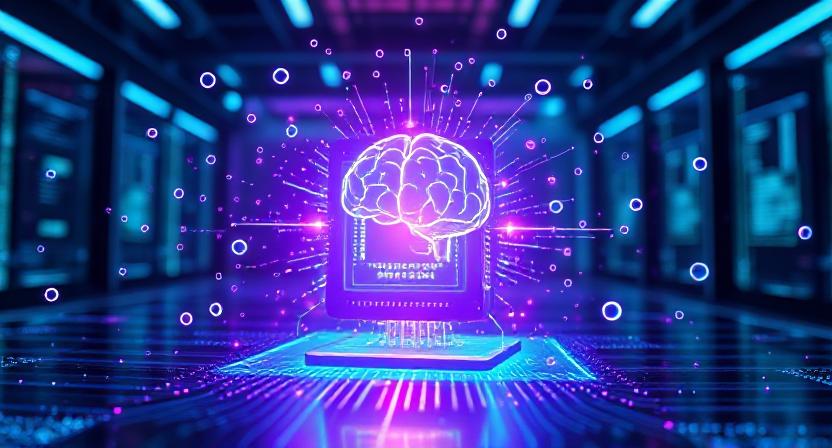
Quantum computers can perform complex calculations millions of times faster than traditional computers.
Problems that might take years to solve on a normal computer can now be handled in seconds.
🌐 Impact Areas:
- Cybersecurity
- Weather Forecasting
- Medical Research
- Artificial Intelligence
Quantum Computing is a technology that is millions of times faster than traditional computers. It uses quantum bits (Qubits), which can exist in both 0 and 1 states simultaneously. This allows Quantum Computers to solve extremely complex calculations in seconds.
🌟 Key Uses and Benefits:
- Cybersecurity: Quantum encryption ensures complete data security.
- Medical Research: Helps in discovering new drugs and finding solutions for complex diseases.
- Weather and Climate Modeling: Enables highly accurate predictions for the future.
- AI and Machine Learning: Superfast data processing and advanced pattern recognition.
Quantum Computing is a future-ready technology with the potential to revolutionize our lives, industries, and scientific research.
☀️ 4: Renewable Energy – The Era of Clean Power
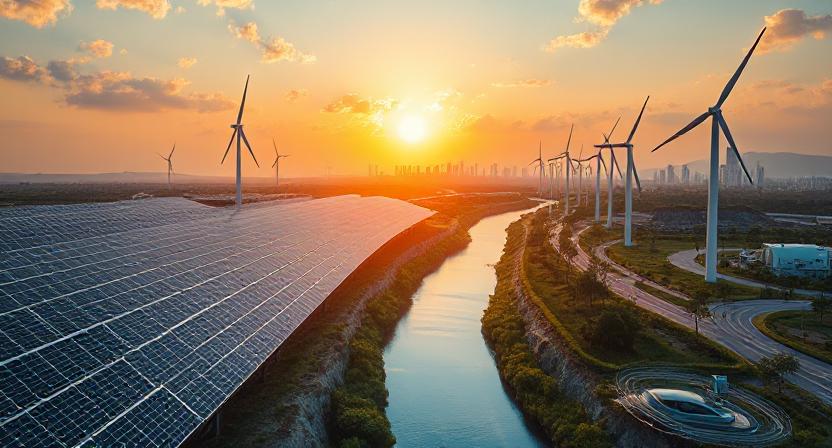
The world is moving away from fossil fuels toward solar, wind, and hydrogen energy.
This shift is humanity’s biggest hope in the fight against climate change.
🌍 Breakthroughs:
- Solar Paint that can turn any surface into a solar panel.
- Hydrogen Fuel Cells that provide sustainable energy for industries and vehicles.
Today, renewable energy plays a crucial role in making our world cleaner, sustainable, and pollution-free. Sources like solar, wind, hydrogen, and bioenergy are replacing traditional fossil fuels.
🌍 Key Benefits:
- Environmental Protection: Reduces carbon emissions and fights global warming.
- Sustainable Development: Provides a continuous energy supply to meet growing human needs.
- New Technology: Solar panels, wind turbines, and hydrogen fuel cells are the backbone of future energy solutions.
Renewable energy is not just a power source; it is the foundation of future technological revolution and economic growth. Its widespread use can make homes, industries, and cities cleaner, smarter, and more sustainable.
🧠 5: Brain-Computer Interface – When the Mind Talks to Machines
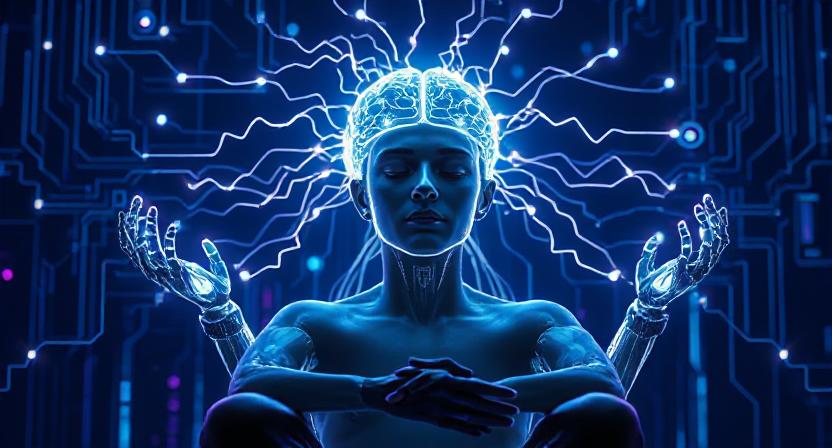
Projects like Elon Musk’s Neuralink are bringing humans and machines closer than ever.
Imagine controlling your phone or a robot just by thinking.
🧩 Applications:
- Treatment for paralyzed patients
- Memory enhancement and transfer
- Development of “superhuman” intelligence
Brain-Computer Interface (BCI) is a cutting-edge technology that establishes a direct connection between the human brain and machines. With BCI, we can control computers, robots, or smart devices using only our thoughts.
BCI is transforming the lives of paralyzed patients, allowing them to communicate and operate machines without physical movement. Additionally, this technology contributes to memory enhancement, learning improvement, and the development of superhuman intelligence.
Projects like Neuralink are continuously pushing the boundaries of BCI, making the integration between humans and machines deeper and more effective.
In the near future, BCI will not only revolutionize healthcare and education but also enhance everyday human capabilities, taking human potential to unprecedented heights.
🚀 6: Space Exploration – The New Space Age

Agencies like NASA, ISRO, and SpaceX are now working on Mars colonization and Lunar mining.
In the near future, humans may live on multiple planets.
🌌 Recent Breakthroughs:
- James Webb Telescope captured images of the earliest galaxies after the Big Bang.
- Chandrayaan-3 made history at the Moon’s South Pole.
The age of space exploration is opening new opportunities and possibilities for humanity. Agencies like NASA, ISRO, and SpaceX are no longer limited to Earth. Their goals include Mars colonization, lunar mining, and deep space exploration.
Recently, the James Webb Space Telescope captured images of the earliest galaxies, completely transforming our understanding of the universe. Meanwhile, Chandrayaan-3 successfully landed at the Moon’s South Pole, making history.
In the future, space travel, discovering life on other planets, and utilizing solar system resources could revolutionize human life. Space exploration not only expands scientific knowledge but also paves the way for new technologies and innovations that will impact our daily lives.
🧫 7: Nanotechnology – The Power of the Invisible

Nanotechnology manipulates matter at the atomic level — making things stronger, smarter, and more efficient.
It’s transforming medicine, fabrics, and electronics.
🌟 Benefits:
- Targeted Cancer Treatment
- Self-cleaning materials
- Flexible electronics
Nanotechnology is the science of manipulating matter at an ultra-small scale (one nanometer, or 1/1,000,000,000 meters). It is so tiny that the human eye cannot see it, yet its effects are massive and extraordinary.
Nanotechnology is widely used in medicine for cancer treatment, precise drug delivery, and biological testing. Additionally, it is revolutionizing electronics, fabrics, and energy technologies.
In the future, Nanotechnology will enable the creation of smart materials, self-cleaning surfaces, and high-capacity batteries. This technology will not only make human life easier but also form the foundation of future science and technology.
🧪 8: Synthetic Biology – Creating Life in the Lab

Synthetic biology allows scientists to design and create new life forms from scratch.
By editing DNA, they can produce new cells, enzymes, and organisms that serve specific human purposes.
Synthetic Biology is an advanced branch of science where researchers create new forms of life in the laboratory. It involves modifying or designing fundamental life components like DNA, RNA, and proteins. This technology is transforming biology and biotechnology, while also revolutionizing medicine, energy, and environmental conservation.
Today, scientists are developing organisms capable of performing specific tasks, such as removing pollutants, producing medicines, or enhancing agricultural productivity. The future of Synthetic Biology is extremely promising — it plays a crucial role in understanding, controlling, and innovating life to provide solutions for humanity.
🌡️ 9: Climate Engineering – Cooling the Planet with Science

To combat global warming, scientists are developing technologies like Artificial Rain, Carbon Capture, and Solar Radiation Management.
🌱 Benefits:
- Temperature control
- Protection of glaciers
- Stabilization of sea levels
To tackle climate change and global warming, Climate Engineering or Geoengineering has emerged as a promising solution. Scientists are developing innovative methods to regulate the Earth’s temperature. Key techniques include Carbon Capture, Artificial Rain, and Solar Radiation Management.
Carbon Capture removes carbon dioxide from the atmosphere, reducing the greenhouse effect. Artificial Rain helps alleviate water shortages in drought-prone areas. Meanwhile, Solar Radiation Management controls sunlight to balance global temperatures.
These technologies not only help mitigate global warming, but they also protect human life from natural disasters like floods, droughts, and extreme weather events.
🤖 10: Robotics and Automation – When Machines Outperform Humans
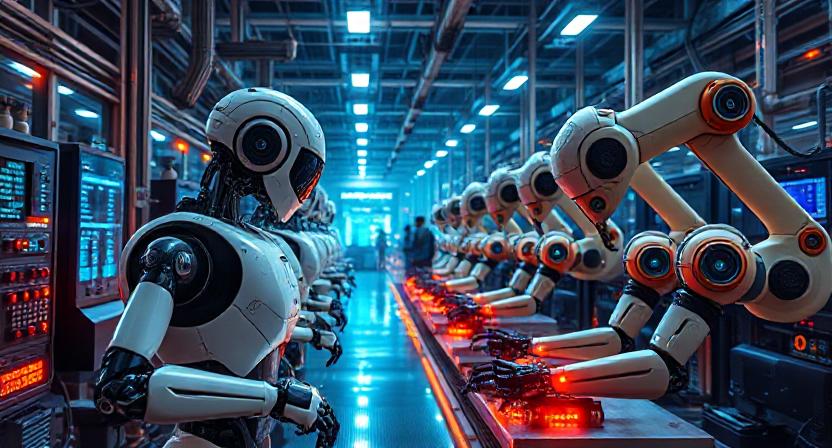
Robots are no longer confined to factories.
They are now entering healthcare, education, and even our homes.
⚙️ Examples:
- Boston Dynamics humanoid robots
- Surgical Robots performing precise operations
- Service Robots assisting the elderly
In today’s world, Robotics and Automation are surpassing human limits. Robots in factories, healthcare, education, and homes are no longer just assisting humans—they are performing complex tasks faster and with greater precision.
Humanoid robots, AI-powered robotic arms, and smart automation systems can work more quickly, safely, and error-free compared to humans.
In the future, this technology will revolutionize Industry 5.0, smart factories, surgical robots, service robots, and research labs.
Robotics and automation not only simplify work but also increase human productivity and efficiency.
These technologies will play a crucial role in shaping a future that is smarter, safer, and highly advanced.
🌟 Conclusion:
The future of science is beyond our imagination.
These 10 breakthroughs prove that humanity is no longer limited to Earth — we are exploring our DNA, the universe, and even artificial intelligence.
Science isn’t just changing life; it’s creating the future itself.
SUGGESTED READ 👇
Science and Innovation 2026: How New Ideas Are Creating a Better World
Future of Technology 2026: Smart Devices Beyond Human Imagination
Future of Robotics: When Machines Begin to Think & Evolve
Top 10 Scientific Inventions That Changed Human Life
EXPLORE MORE INTERESTING FACTS
FOLLOW US ON SOCIAL MEDIA👇
FAQ. Frequency Ask Questions
1. 🌍 What is the biggest scientific breakthrough shaping our future?
Today, Artificial Intelligence (AI) and Gene Editing (CRISPR) are considered the biggest scientific breakthroughs. These technologies are revolutionizing healthcare, education, and every aspect of human life.
2. 🧬 How does Gene Editing work, and what is its future?
Gene Editing is a technology that allows scientists to modify human DNA, making it possible to eliminate diseases from their roots.In the future, it could be used to treat cancer, thalassemia, and genetic disorders permanently.
3. 🤖 Will Artificial Intelligence replace humans?
AI will not replace humans but will enhance human capabilities.
It plays a major role in data analysis, healthcare, education, and space research, making life smarter and more efficient.
4. ⚡ What changes will Quantum Computing bring?
Quantum Computers are bringing a revolution in data processing and cybersecurity with their ultra-fast computational power.
They are millions of times faster than traditional computers and will significantly advance medical and space research in the future.
5. 🌞 Why is Renewable Energy important for the future?
Renewable Energy sources such as solar, wind, and hydrogen are vital for a pollution-free planet.They not only help protect the environment but will also serve as the foundation for sustainable development in the future.
6. 🧠 What is a Brain-Computer Interface, and how does it work?
A Brain-Computer Interface (BCI) is a technology that allows humans to control machines using their thoughts.
In the future, it could help paralyzed patients and even enhance human memory and intelligence.
7. 🚀 What are the latest discoveries in Space Exploration?
Recently, the James Webb Telescope captured the earliest galaxies ever seen, and ISRO’s Chandrayaan-3 made history by landing at the Moon’s South Pole.
These missions are transforming our understanding of the universe’s origin and future.
8. 🧫 Where is Nanotechnology being used today?
Nanotechnology is being applied in cancer treatment, self-cleaning materials, and flexible electronics.
It’s a microscopic-level technology that provides massive real-world benefits.
9.🌡️ How will Climate Engineering help reduce global warming?
Scientists are developing Artificial Rain, Carbon Capture, and Solar Reflection technologies to control global temperatures.
These innovations will play a crucial role in combating the climate crisis in the coming decades.
10. 🤖 How are Robotics and Automation changing human life?
Robots are now used not only in factories but also in healthcare, education, and home assistance.
In the future, robots won’t replace humans — they will help us become more capable and efficient.