
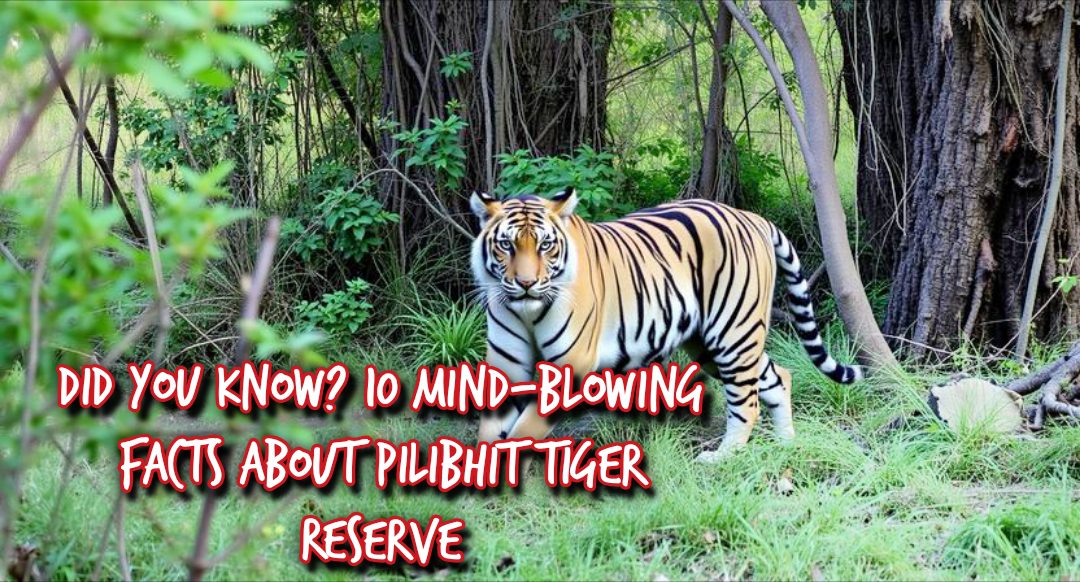
10 Mind-Blowing Facts About Pilibhit Tiger Reserve
10 Mind-Blowing Facts About Pilibhit Tiger Reserve, Pilibhit Tiger Reserve is one of the most fascinating wildlife destinations in Uttar Pradesh, India. Famous for its dense forests, rich biodiversity, and the majestic Royal Bengal Tiger, this reserve is not just a paradise for wildlife lovers but also for nature enthusiasts, photographers, and adventure seekers.

If you think you already know everything about tiger reserves, think again. In this blog, we reveal 10 mind-blowing and shocking facts about Pilibhit Tiger Reserve that very few people know.
Table of Contents
Discover 10 shocking facts about Pilibhit Tiger Reserve, where the world of tigers, mysterious forests, and incredible biodiversity will truly amaze you.

1. The Only Tiger Reserve in Uttar Pradesh
Very few people know that Pilibhit Tiger Reserve is the only tiger reserve in Uttar Pradesh. Located in the Terai region, it lies close to the India–Nepal border. This unique geographical position allows the reserve to share an ecosystem with Nepal’s forests, making it ecologically significant.
2. A Perfect Natural Habitat for Royal Bengal Tigers
The forests of Pilibhit are filled with tall grasslands, sal trees, marshy wetlands, and small rivers. Together, these elements create a perfect natural habitat for Royal Bengal Tigers. Tigers here get ideal conditions for hunting, hiding, and protecting their territory.
3. Connected to Nepal Through a Tiger Corridor
Pilibhit Tiger Reserve is not limited to India alone. It is connected to Nepal’s Shuklaphanta National Park through a tiger corridor. This corridor allows tigers to move freely between the two countries, helping maintain a healthy population and genetic diversity.
4. Recognized by UNESCO for Biodiversity
One of the most surprising facts is that Pilibhit Tiger Reserve has been recognized under UNESCO’s “Man and the Biosphere Programme.” This international recognition highlights its importance as a globally significant biodiversity region.
5. Home to More Than 120 Bird Species
Pilibhit is not just about tigers. The reserve is home to over 120 species of birds, including several migratory birds during winter. This makes it a dream destination for bird watchers and wildlife photographers.
6. Part of the Famous Terai Arc Landscape
Pilibhit Tiger Reserve is an integral part of the Terai Arc Landscape, a vast ecological region spread across northern India and Nepal. This landscape plays a crucial role in conserving endangered species such as tigers, elephants, leopards, and deer.
7. Continuous Growth in Tiger Population
In recent years, Pilibhit Tiger Reserve has witnessed a steady increase in its tiger population. This growth is considered a major success of India’s tiger conservation efforts and proves that proper protection and management can save endangered species.
8. The Unique Bond Between the Tharu Tribe and the Forest
The Tharu tribal community, residing in and around Pilibhit, has a deep-rooted relationship with the forest. For generations, they have lived in harmony with nature, following traditional practices that support conservation and sustainable living.
9. An Emerging Eco-Tourism Hotspot
Pilibhit Tiger Reserve is rapidly emerging as a popular eco-tourism destination. Activities like jungle safaris, nature walks, and bird watching allow visitors to connect deeply with nature while promoting responsible tourism.
10. Less Crowded, More Thrilling
Compared to famous tiger reserves like Jim Corbett or Ranthambore, Pilibhit receives fewer tourists. This means more peace, more chances to experience raw wilderness, and a more thrilling jungle adventure—especially for wildlife photographers.
Best Time to Visit Pilibhit Tiger Reserve

- October to June: Best time for jungle safaris
- November to February: Ideal for bird watching
- Monsoon (July–September): Most areas remain closed
Conclusion
Pilibhit Tiger Reserve is not just a forest—it is a priceless natural treasure of India. These 10 mind-blowing facts clearly show that the reserve is as mysterious and exciting as it is peaceful and beautiful.
If you love nature, wildlife, and tigers, Pilibhit Tiger Reserve deserves a top spot on your travel bucket list.
If you enjoyed this article, don’t forget to share it and stay connected for more Mind blowing and amazing wildlife and travel blogs. 🌿🐅
People Like Also
New Year 2026 Special: Best Snowy Winter Destination, You Must Visit
Top 5 Coldest Places in the World to Visit on New Year 2026 | Extreme Winter Travel Guide
New Year 2025 Badrinath Dham Yatra: A Spiritual Beginning Amid Snow-Clad Himalayas
Maa Purnagiri Dham, Tanakpur – Uttarakhand: 10 Interesting Facts
Click on our blog to read more surprising, informative, and interesting facts on Factphilia.
Follow Factphilia on social media and get interesting facts, surprising information, trending stories, and educational content first – stay connected with us to learn something new every day.
FAQ. Frequency ask questions
Where is Pilibhit Tiger Reserve located?
Pilibhit Tiger Reserve is located in the Pilibhit district of Uttar Pradesh, India, in the Terai region along the India–Nepal border.
Is Pilibhit Tiger Reserve the only tiger reserve in Uttar Pradesh?
Yes, Pilibhit Tiger Reserve is the only officially designated tiger reserve in Uttar Pradesh, Apart from Royal Bengal Tigers, the reserve is home to elephants, leopards, deer, sambar, chital, and many other wildlife species.
How many tigers are found in Pilibhit Tiger Reserve?
According to periodic wildlife surveys, the tiger population in Pilibhit Tiger Reserve has been steadily increasing, reflecting successful conservation efforts.
What recognition has Pilibhit Tiger Reserve received from UNESCO?
Pilibhit Tiger Reserve is recognized under UNESCO’s Man and the Biosphere Programme, highlighting its global ecological importance.
Is Pilibhit Tiger Reserve connected to Nepal’s forests?
Yes, Pilibhit Tiger Reserve is connected to Nepal’s Shuklaphanta National Park through an international tiger corridor, allowing wildlife movement between the two countries.
What is the best time to visit in Pilibhit Tiger Reserve?
The best time to visit is from October to June, which is ideal for safaris and wildlife sightings.
Are jungle safaris available in Pilibhit Tiger Reserve?
Yes, visitors can enjoy jungle safaris, bird watching, and guided nature trails inside Pilibhit Tiger Reserve.
Why does Pilibhit Tiger Reserve trend on Google Discover?
It trends on Google Discover due to high-interest topics such as wildlife, tiger facts, nature travel, and “Did You Know”-style content, which attract strong user engagement.
Why is Pilibhit Tiger Reserve considered special?
Low tourist crowd, rich biodiversity, a growing tiger population, and international recognition make it one of India’s most unique tiger reserves.
Related Stories

10 Ancient Indian Inventions That Changed the World
Surprising 10 Ancient Indian Inventions That Changed the World India is renowned not only for…

10 Psychological Facts About Human Behavior and Attraction
10 Psychological Facts About Human Behavior and Attraction Human behavior and attraction have always been…

Unbelievable: Top 10 Space Exploration Facts in 2026 That Will Shock You
Top 10 Space Exploration Facts in 2026 That Will Shock You Did you know that…

7 Amazing Psychology Secrets Behind Human Behavior: Proven to Change the Way You Think
🧠 Psychology Secrets Behind Human Behavior: That Will Change the Way You Think Have you…

How does the human brain work? 5 Psychology facts that will change your thinking
Have you ever wondered what’s happening inside the brain when we think? How does the…

Why Do Humans Think This Way? Science Reveals the Hidden Truth
Why Do Humans Think This Way? Science Reveals the Hidden Truth Have you ever wondered…

10 Ancient Indian Inventions That Changed the World
Surprising 10 Ancient Indian Inventions That Changed the WorldIndia is renowned not only for its culture, yoga, and spirituality, but…

10 Psychological Facts About Human Behavior and Attraction
10 Psychological Facts About Human Behavior and AttractionHuman behavior and attraction have always been a subject of mystery. We often…

Unbelievable: Top 10 Space Exploration Facts in 2026 That Will
Top 10 Space Exploration Facts in 2026 That Will Shock YouDid you know that 2026 has become a historic year…

7 Amazing Psychology Secrets Behind Human Behavior: Proven to Change
🧠 Psychology Secrets Behind Human Behavior: That Will Change the Way You ThinkHave you ever wondered why people sometimes make…

How does the human brain work? 5 Psychology facts that
Have you ever wondered what’s happening inside the brain when we think?How does the human brain work? This question crosses…

Why Do Humans Think This Way? Science Reveals the Hidden
Why Do Humans Think This Way? Science Reveals the Hidden TruthHave you ever wondered why two people think completely differently…



Leave a Reply