🌌 5 Umbrellaable Discoveries in Space and Science You Must Know

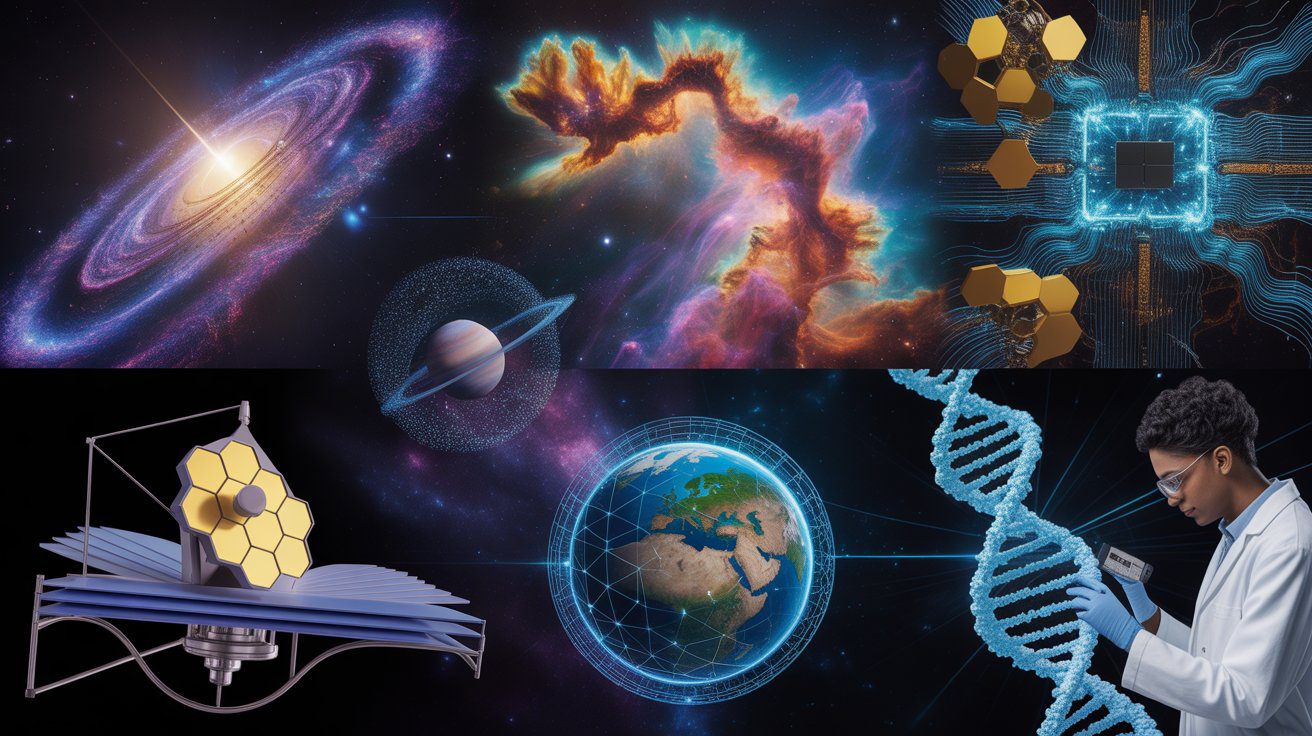
5 Umbrellaable Discoveries in Space and Science You Must Know, Science and space have always been about discovery — but in recent years, we’ve entered an era where each revelation expands our entire understanding of the universe. These are not just ordinary findings; they’re “Umbrellaable discoveries” — vast breakthroughs that cover multiple branches of science under one grand idea.
So, let’s dive into five awe-inspiring discoveries that are reshaping our view of reality, the cosmos, and the future of human knowledge.
Table of Contents
🚀 1. The James Webb Space Telescope (JWST) Revolution
Discovery and Significance
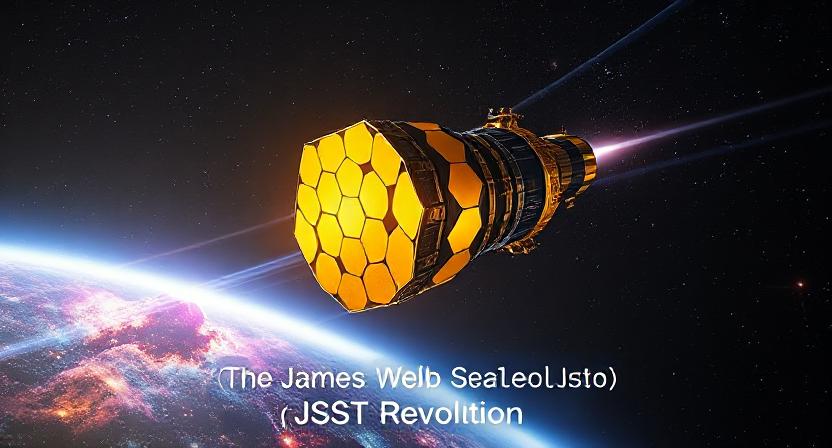
When NASA launched the James Webb Space Telescope (JWST), it wasn’t just another telescope — it was humanity’s new eye into the beginning of time. JWST’s infrared technology allows it to see through cosmic dust and look farther back in time than any telescope ever built.
What It Revealed
- JWST has detected some of the oldest galaxies ever observed, formed just a few hundred million years after the Big Bang.
- Its deep-field images revealed never-before-seen stellar nurseries, galactic formations, and planetary atmospheres.
- Scientists have used it to study exoplanets’ atmospheres, identifying molecules like water vapor and carbon dioxide.
Why It’s “Umbrellaable”
JWST’s discoveries touch nearly every field of space science — cosmology, astrophysics, planetary science, exoplanet research, and stellar evolution. It’s not one discovery — it’s an entire umbrella of discoveries changing how we see the cosmos.
🌌 2. Galactic Mapping and the Structure of the Universe
Discovery and Importance
Understanding the vast structure of the universe has long been a scientific challenge. With missions like Gaia, we now have the most detailed 3D map of our Milky Way galaxy and beyond.

What We’ve Learned
- Gaia has mapped over 1.8 billion stars, creating the most complete model of our galaxy ever made.
- Scientists discovered “The Big Ring”, a mysterious large-scale structure that challenges our understanding of cosmic uniformity.
- These maps reveal the motion and composition of stars, helping trace the galaxy’s formation history.
Why It’s “Umbrellaable”
This discovery connects multiple scientific fields — astrometry, cosmology, galactic evolution, and dark matter research — all under one umbrella of cosmic mapping.
⚛️ 3. Quantum Computing and Future Technologies
Discovery and Importance
The biggest revolution in modern science isn’t just about discovering the universe — it’s about creating new possibilities. Technologies like quantum computing, artificial intelligence, and nanotechnology are paving the way for a smarter, faster, and more connected future.

What’s Happening
- Quantum Computers are thousands of times faster than today’s supercomputers, using qubits that exist in multiple states at once.
- AI and Machine Learning are enabling machines to think, learn, and make decisions autonomously.
- Nanotechnology is transforming medicine, materials science, and electronics, leading to a new wave of microscopic innovation.
Why It’s “Umbrellaable”
These are not isolated breakthroughs — together, they form a massive umbrella of innovation, merging physics, computer science, and engineering to redefine human capability.
🌍 4. Earth Observation and Resource Discovery
Discovery and Importance
While we look outward to the stars, science is also looking inward — toward our home planet.
Modern satellite missions, remote-sensing technologies, and data analytics have revolutionized how we understand Earth’s systems.

Key Developments
- Missions like Tianwen-2 and Hayabusa2 are collecting asteroid samples, revealing clues about Earth’s origin.
- Earth-monitoring satellites are capturing massive amounts of data — tracking deforestation, glaciers, oceans, and pollution in real time.
- AI-based climate modeling is predicting environmental changes with remarkable accuracy.
Why It’s “Umbrellaable”
Earth observation integrates multiple sciences — climate studies, geology, ecology, and resource management — making it one of the most wide-ranging discoveries shaping the future of sustainability.
🧬 5. Life Sciences and Astrobiology – The Search for Life
Discovery and Importance
The quest to find life beyond Earth has entered a new phase. With cutting-edge telescopes, bioengineering, and planetary missions, scientists are discovering how life might exist elsewhere in the universe — and how technology can extend life on Earth.

Breakthroughs So Far
- JWST has detected potential biosignatures in the atmospheres of distant exoplanets.
- Advances in gene editing (CRISPR) and artificial organ creation are redefining human biology.
- Astrobiology is uncovering evidence that microbial life might survive in extreme environments — even on Mars or Europa.
Why It’s “Umbrellaable”
This field unites biology, astronomy, chemistry, medicine, and planetary science — a true interdisciplinary umbrella of discovery that brings science closer to answering one of humanity’s oldest questions: Are we alone?
🌠 Conclusion
These five umbrellaable discoveries show how science and space exploration are not just about singular moments of brilliance — they’re about interconnected revolutions reshaping every corner of human knowledge.
From JWST’s cosmic visions to quantum computers’ unimaginable power, from mapping galaxies to decoding life itself — science is unveiling a new era where knowledge has no boundaries.
✨ Stay curious. Keep exploring.
And don’t forget to subscribe — because the next discovery might just change everything you thought you knew about the universe.
SUGGESTED READ👇
Technology of the Future: From Artificial Intelligence to Quantum Computers
The Magic of Modern Technology: How Science is Changing Our World
Top 10 Amazing Facts of Science & Technology That Will Surprise You
10 Interesting Facts: The Impact of AI on American Culture
EXPLORE MORE INTERESTING FACTS👇
FOLLOW US ON SOCIAL NETWORK
FAQs. Frequency Ask Questions 🙋👇
1. What does “Umbrellaable Discoveries” in Space and Science mean?
It refers to discoveries that cover multiple fields together — such as the universe, quantum science, artificial intelligence, and biotechnology. These discoveries are shaping the future of human knowledge.
2. What is the biggest recent discovery in space?
The most significant one is the James Webb Space Telescope, which has captured images of the most distant galaxies ever seen, revealing secrets about the early universe.
3. How is Quantum Technology transforming space exploration?
With Quantum Computers, data processing has become thousands of times faster, helping scientists better analyze signals from space and study the possibility of life on other planets.
4. Is Artificial Intelligence used in space missions?
Yes, NASA and other space agencies use AI in missions — for example, the Mars Rover, which can analyze the surface and make decisions autonomously.
5. How will these Umbrellaable Discoveries impact our lives?
These discoveries are revolutionizing fields like healthcare, environmental protection, communication, and energy — making our future smarter, safer, and more sustainable.